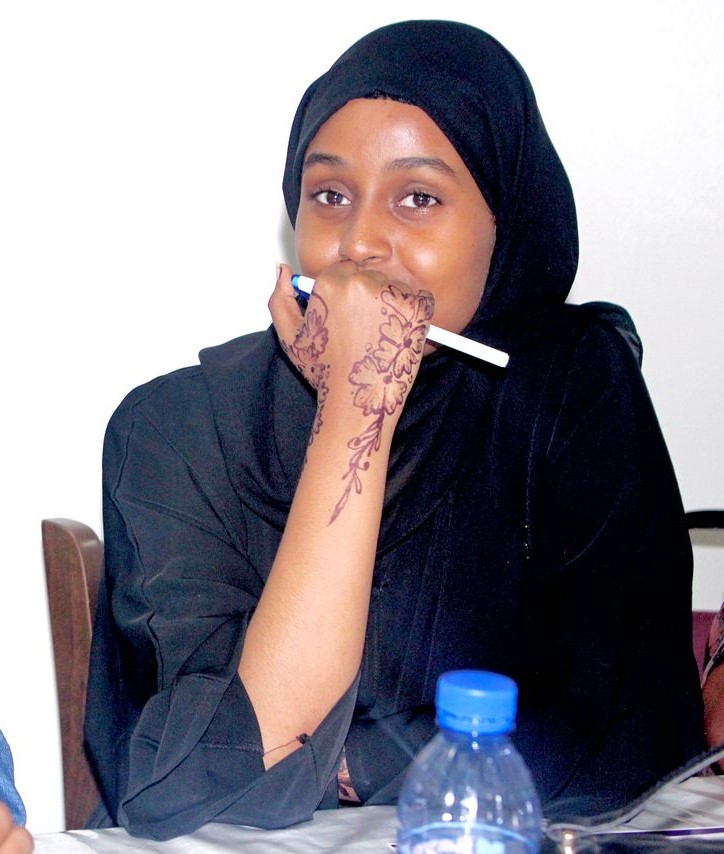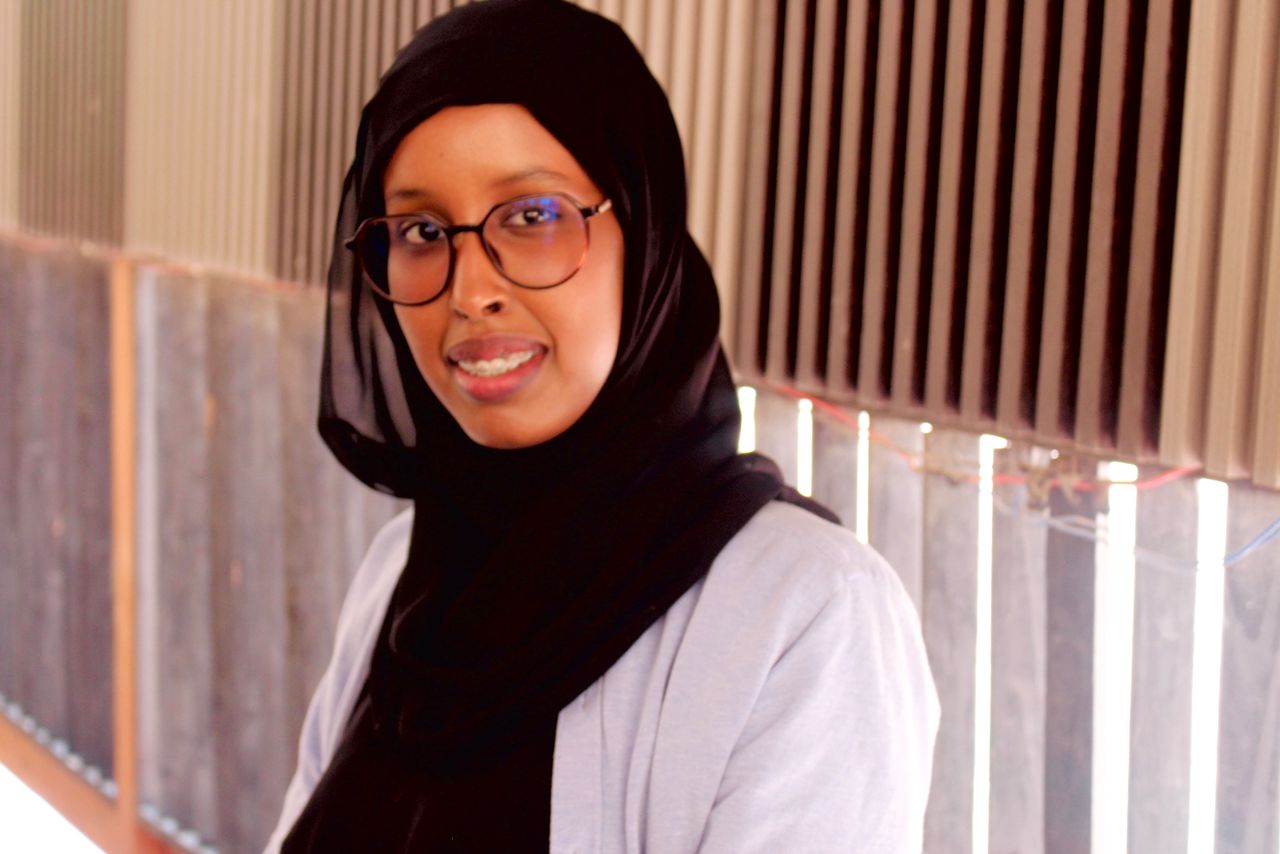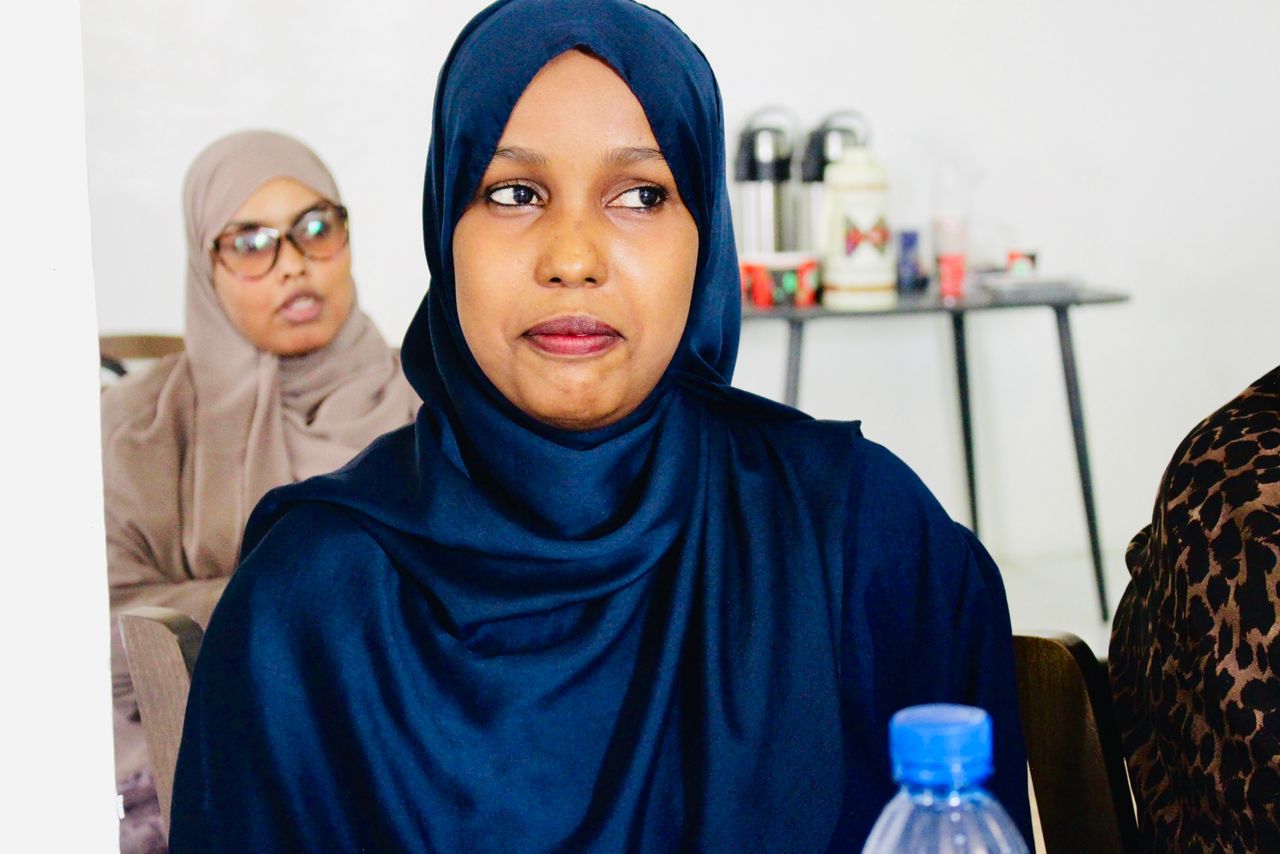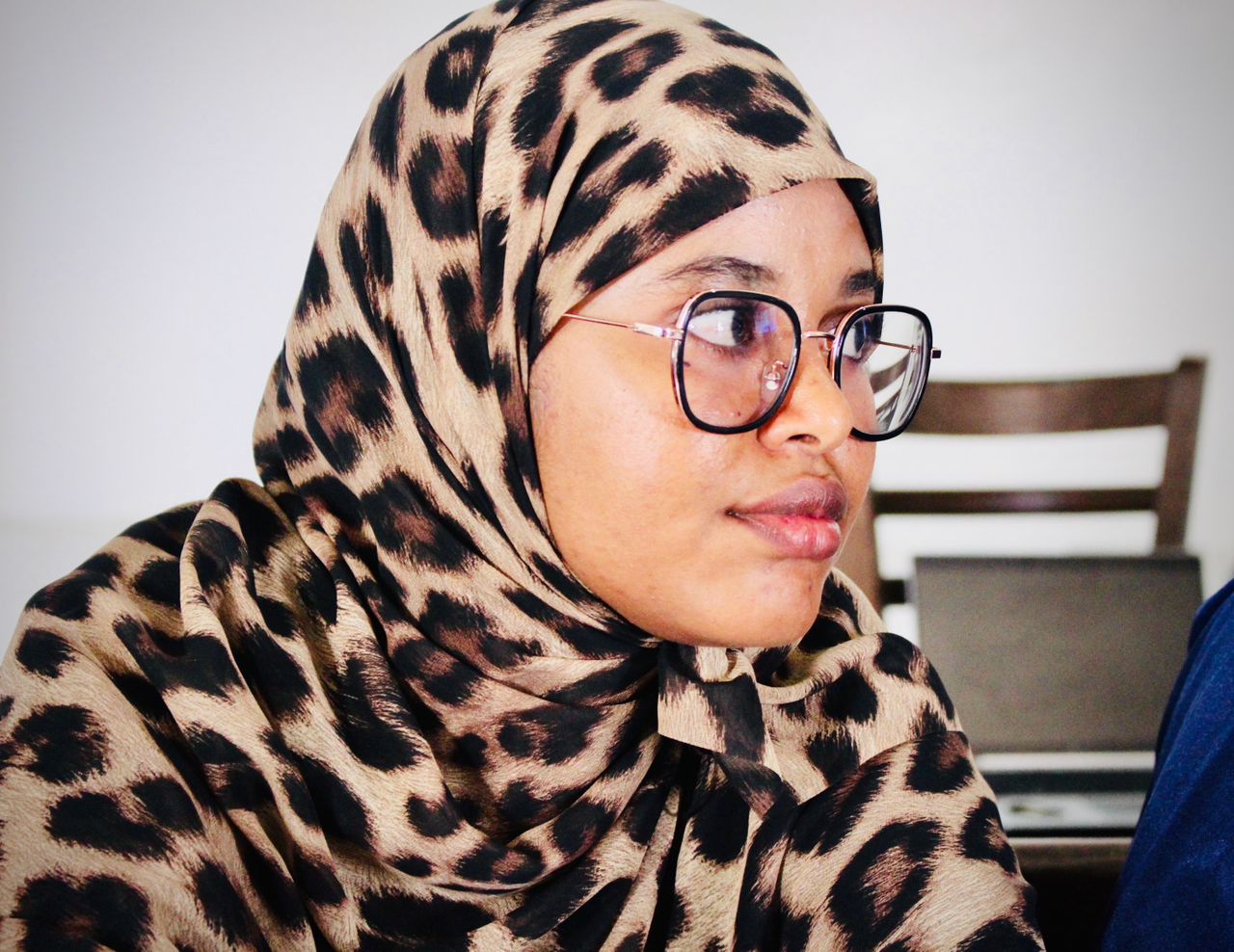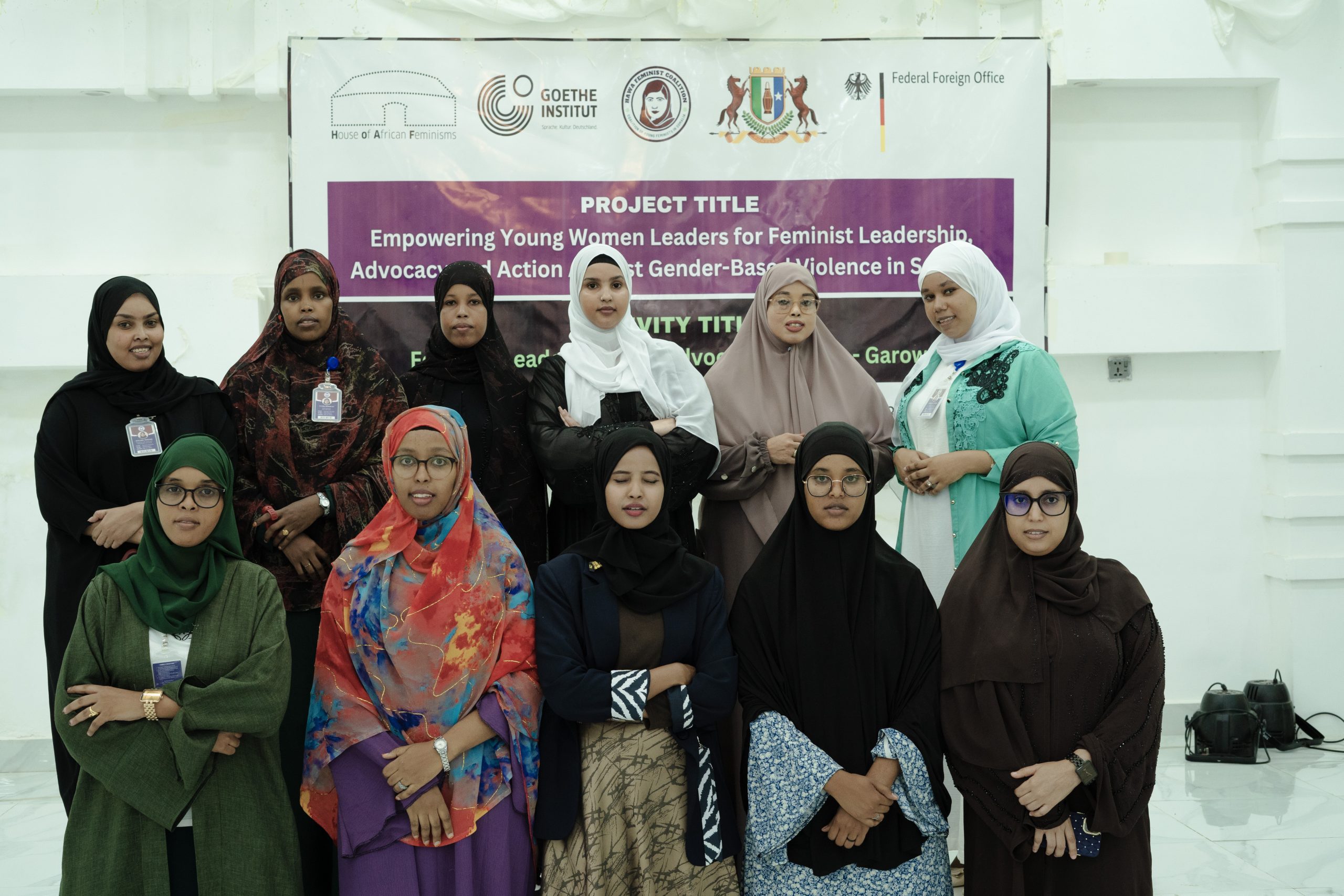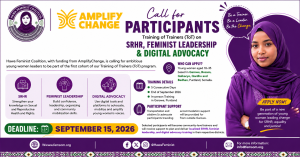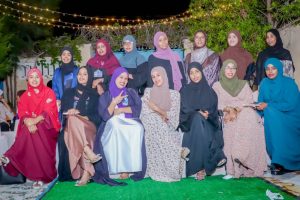
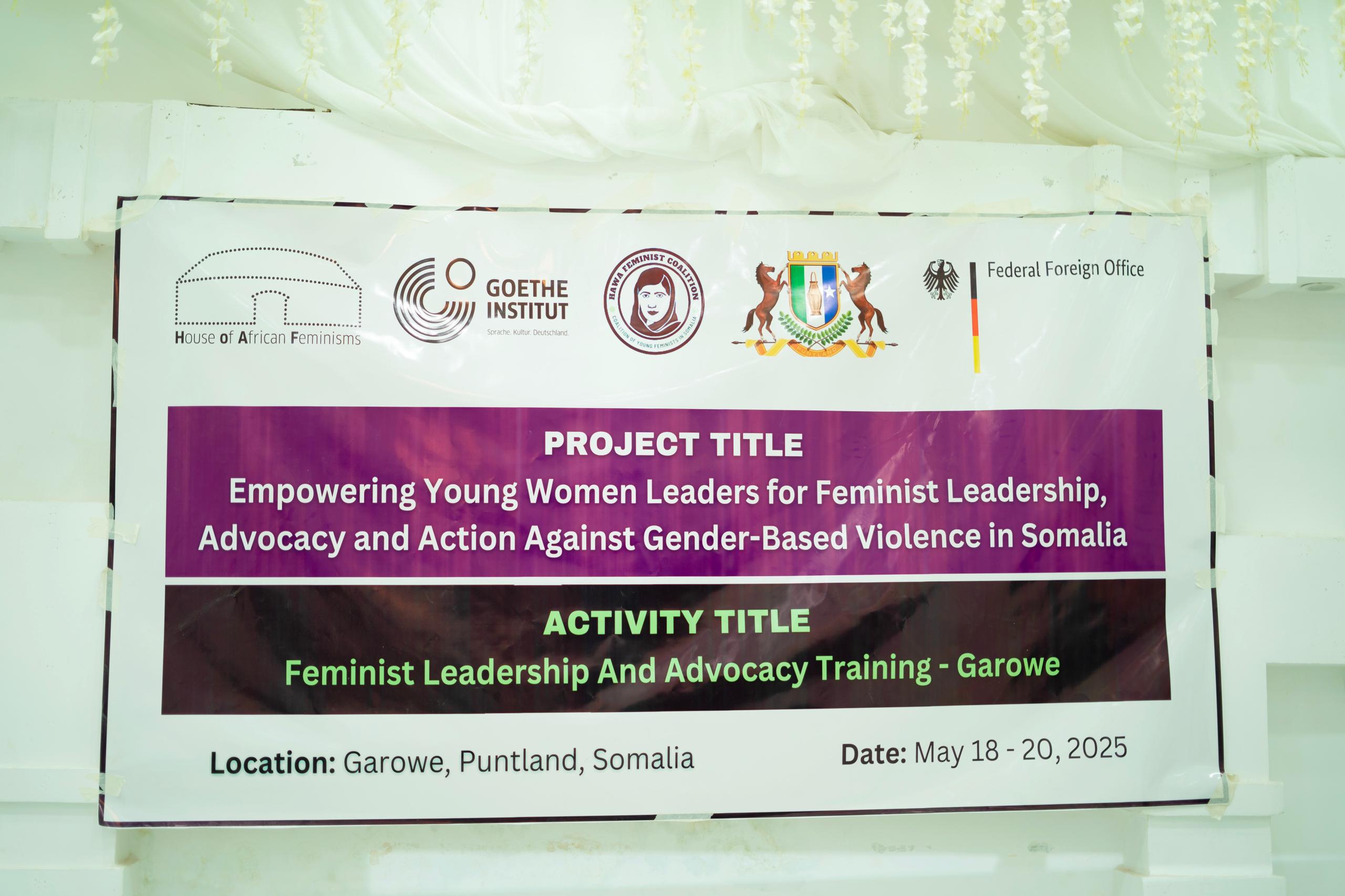
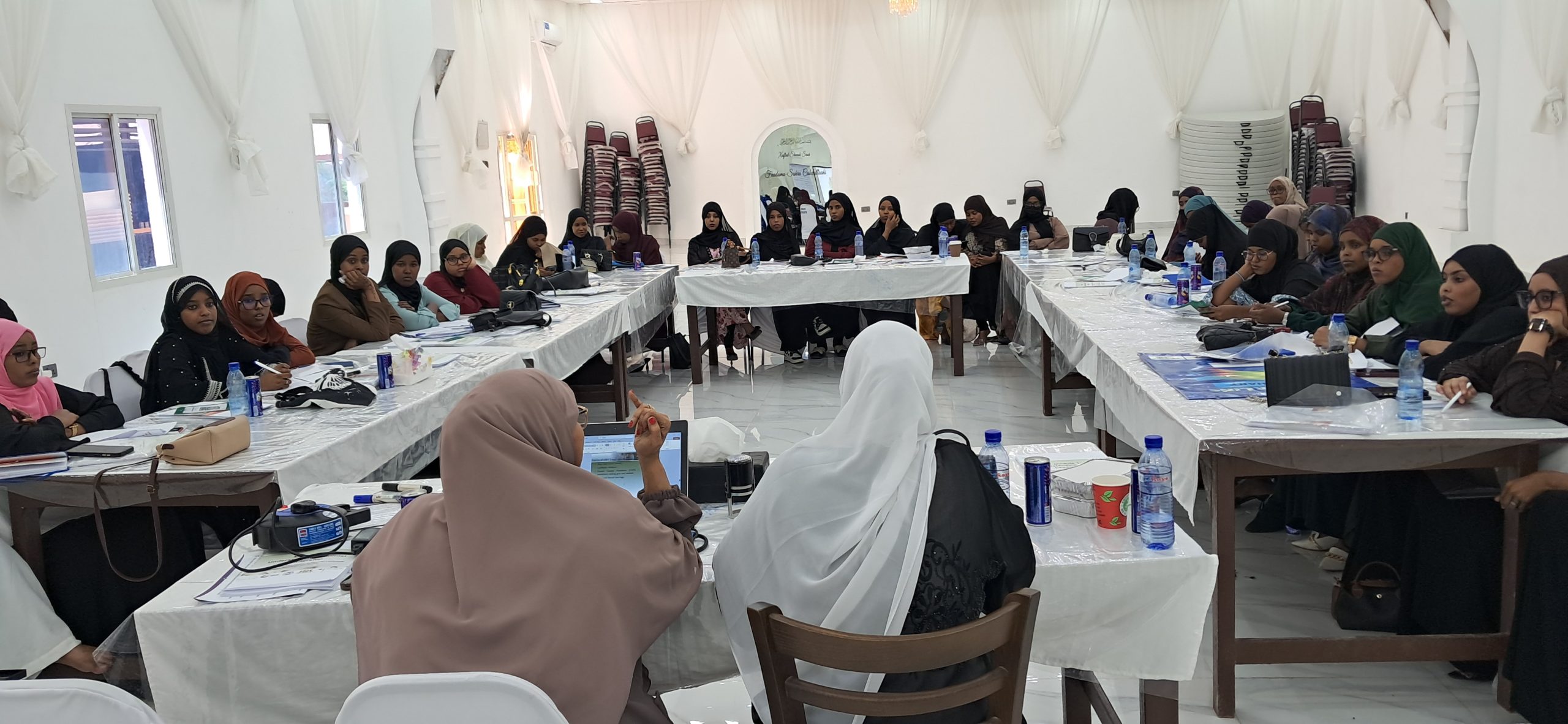
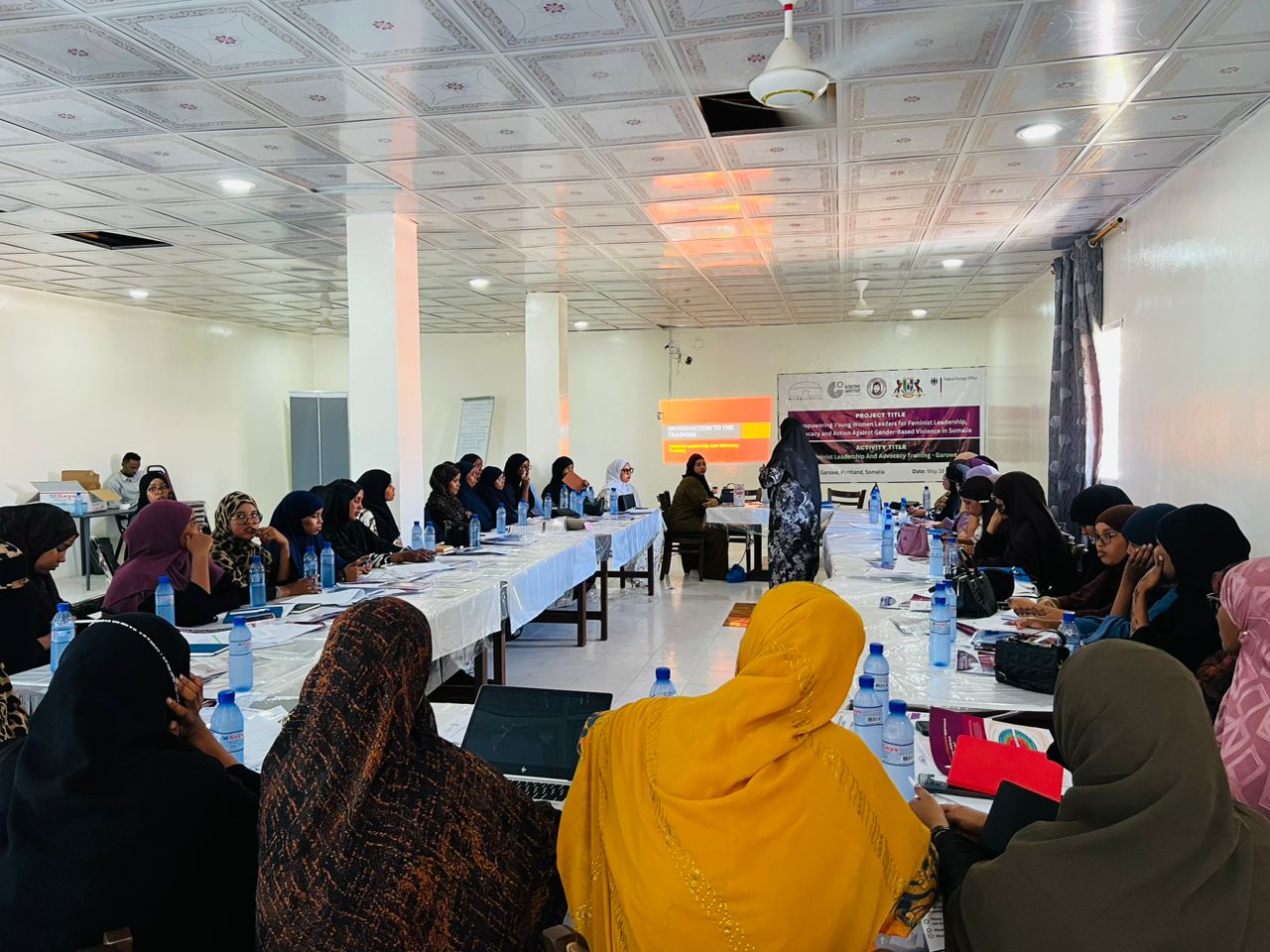
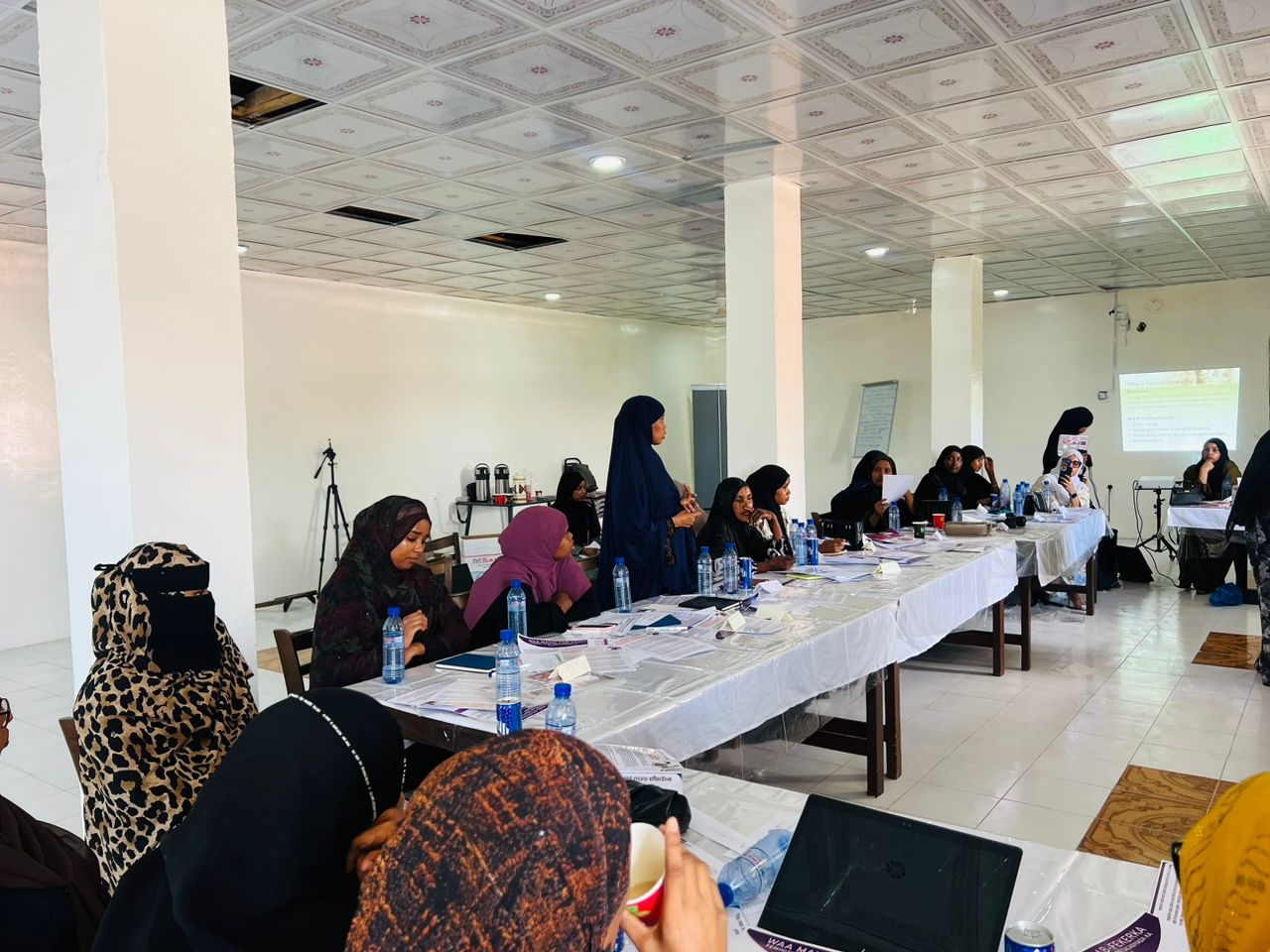
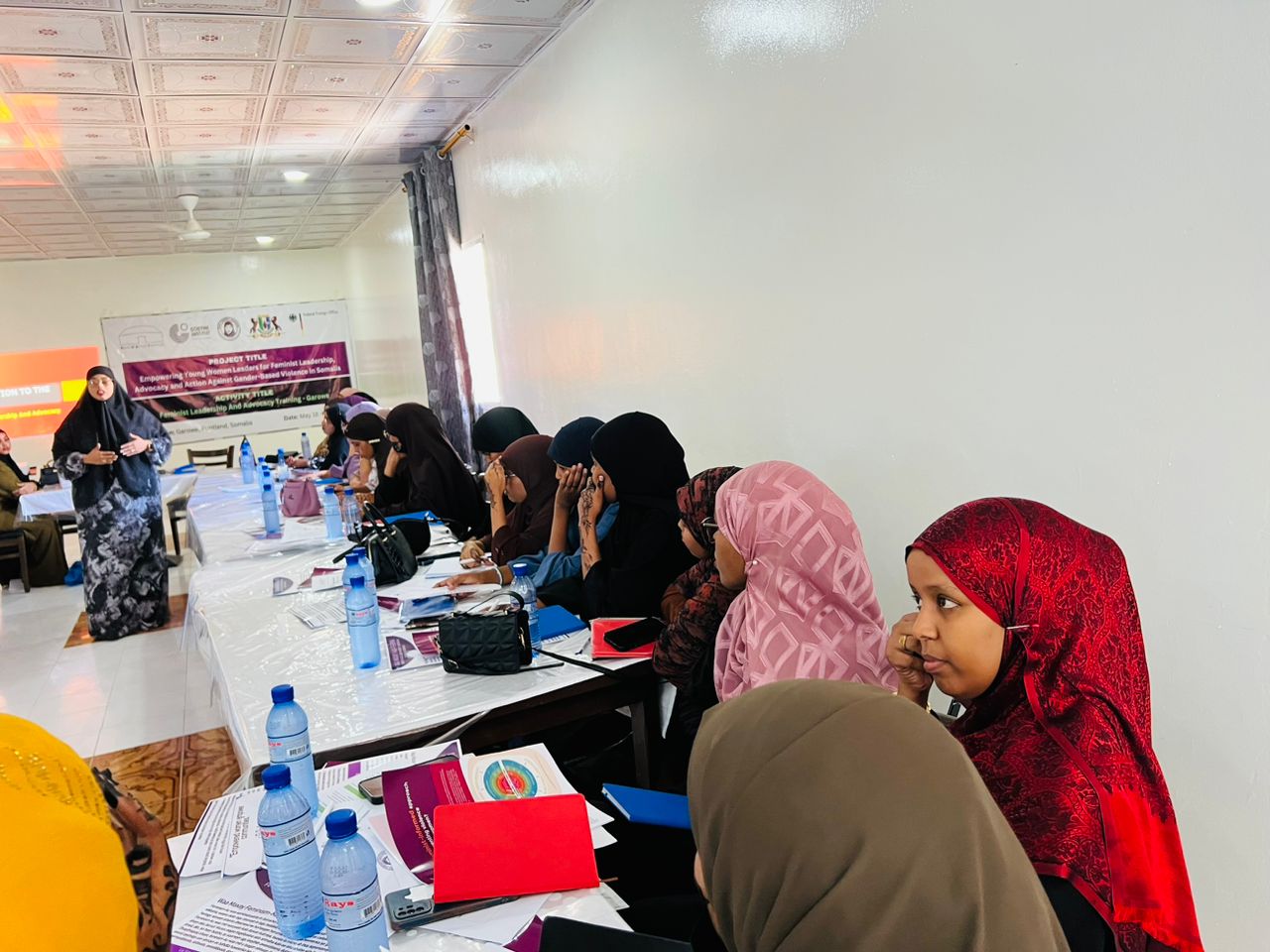
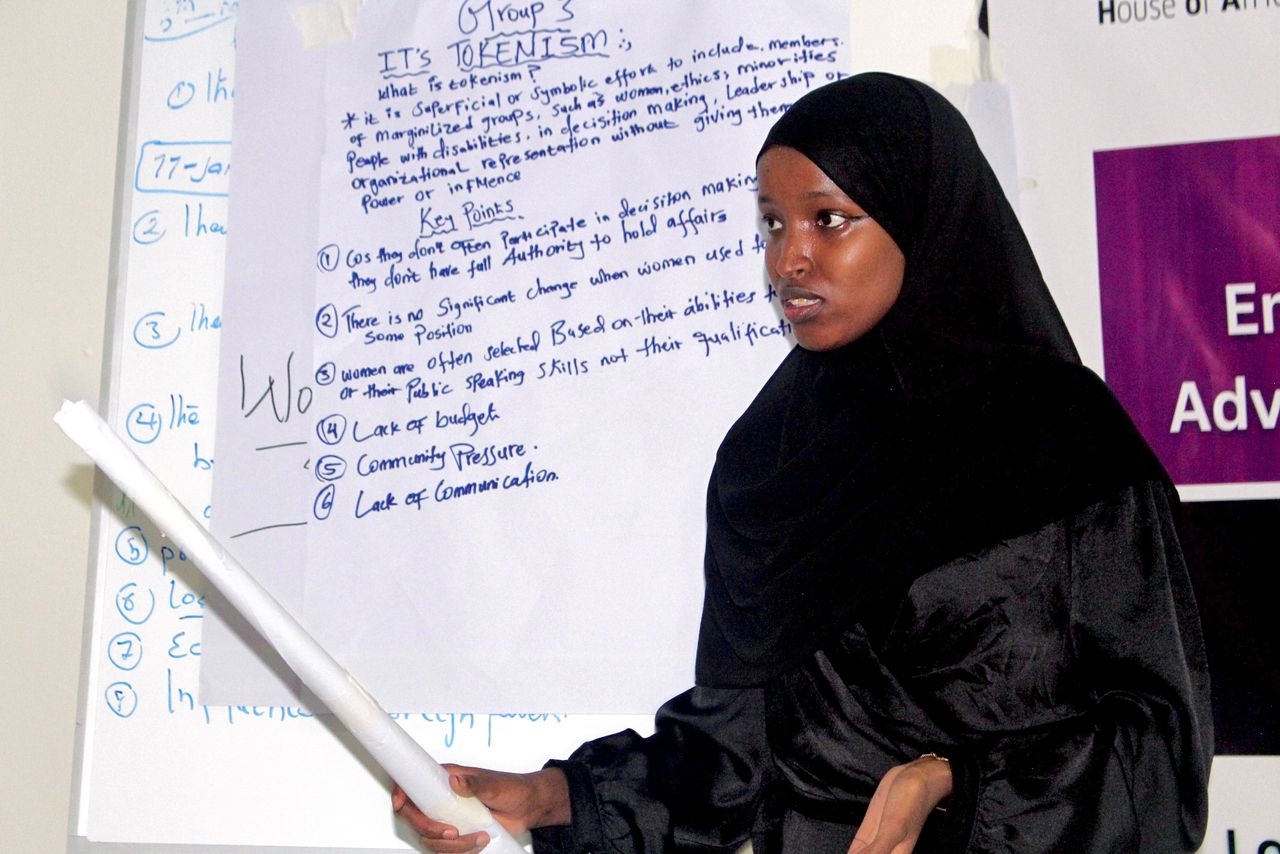
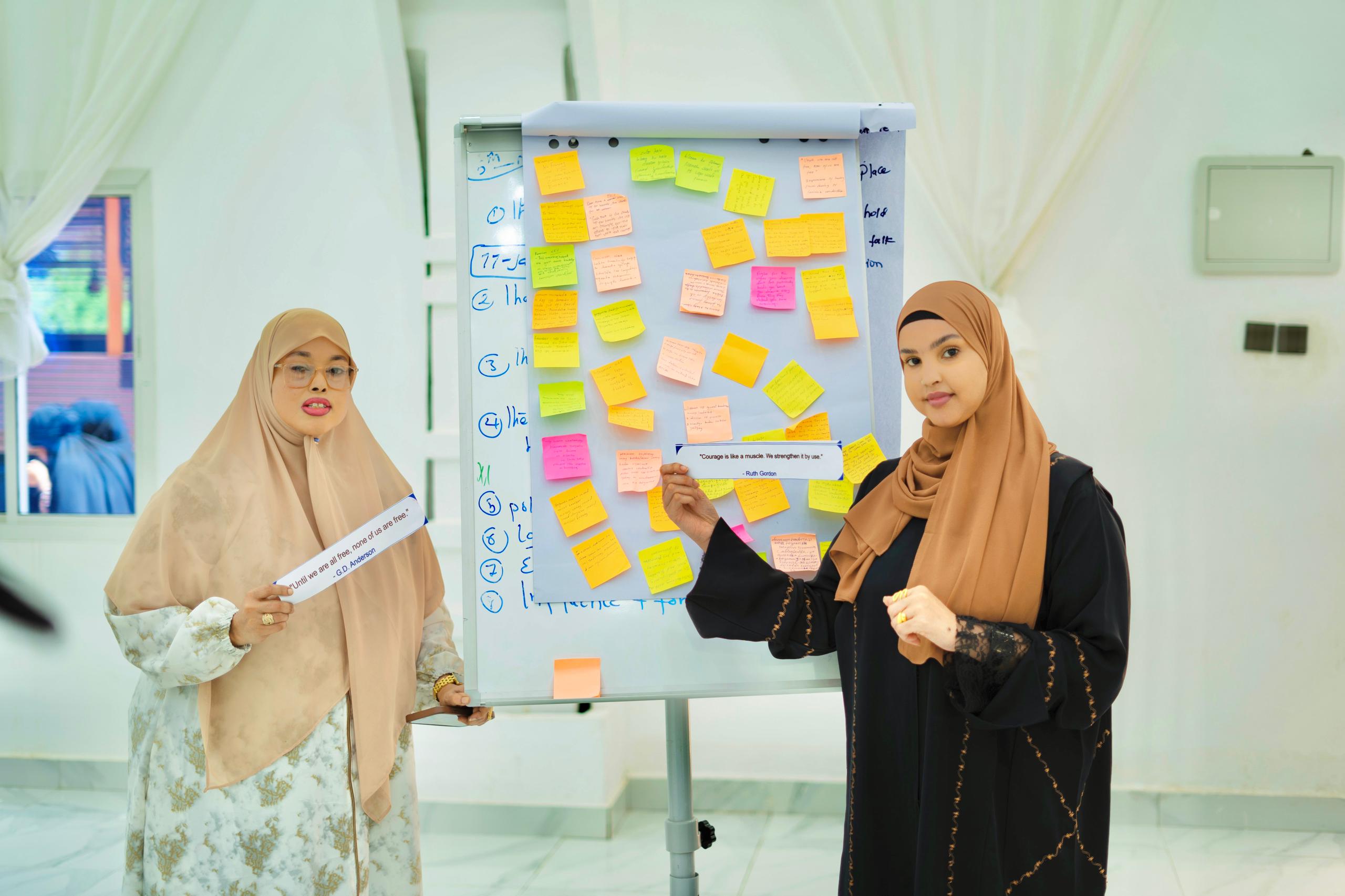
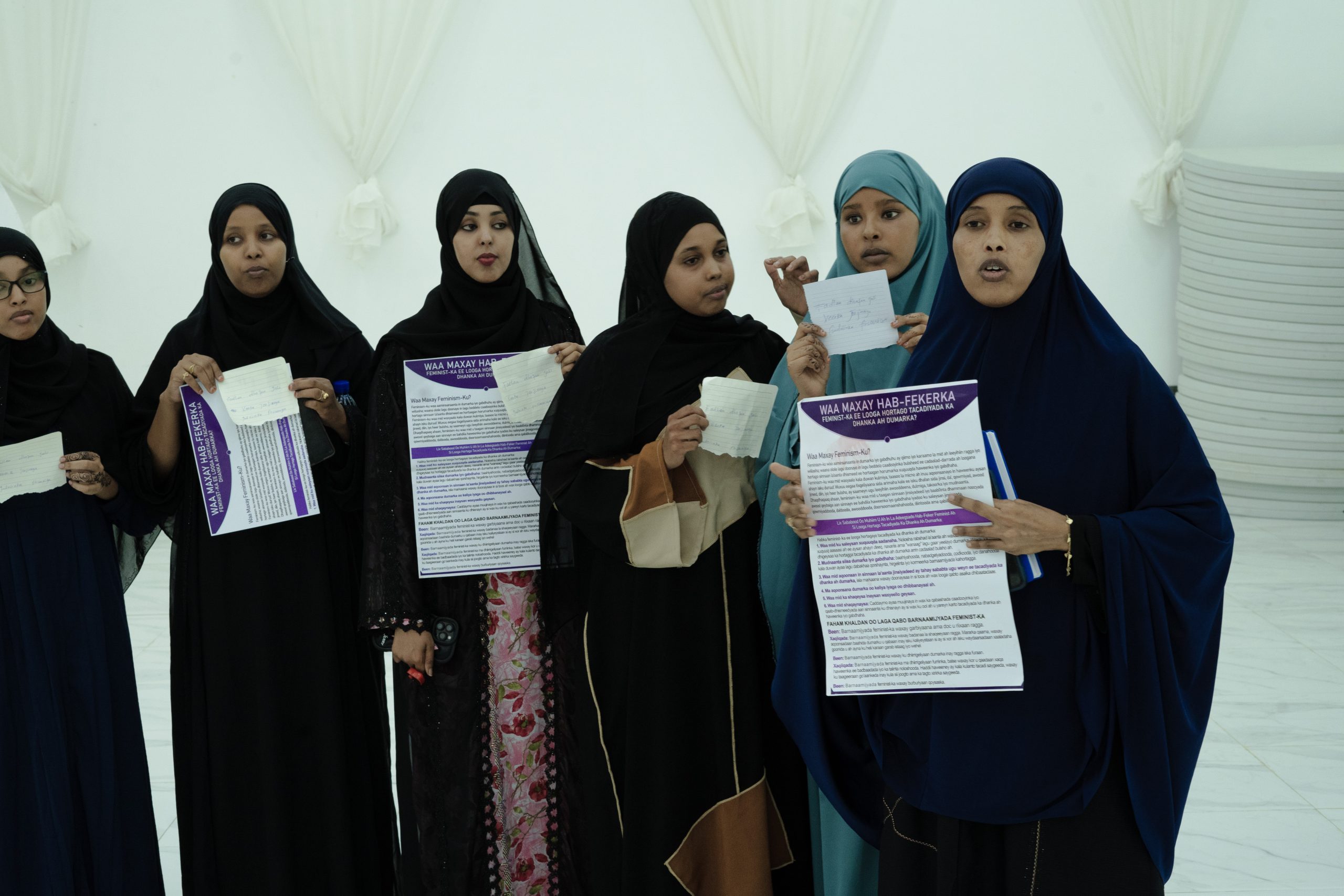
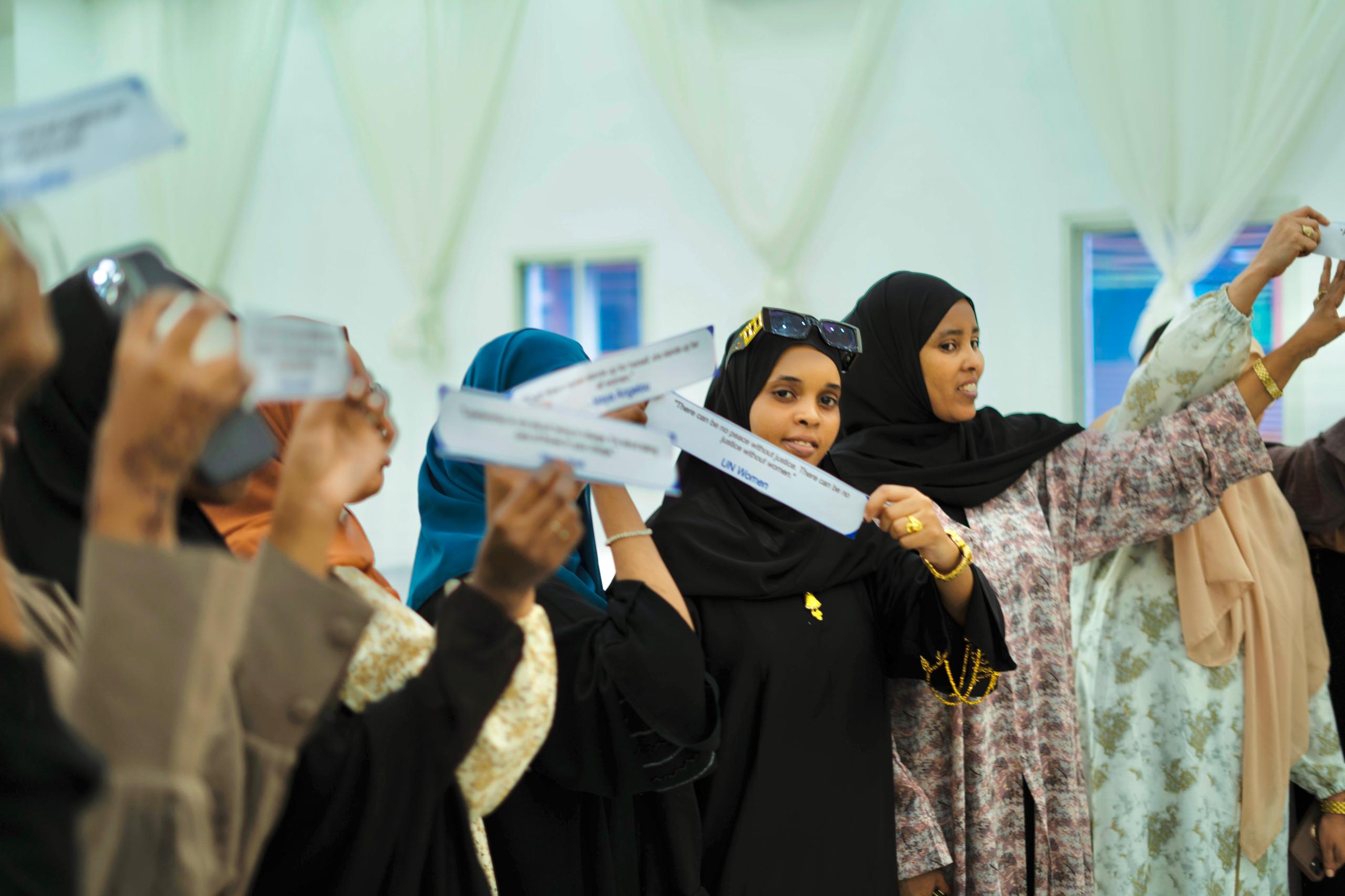
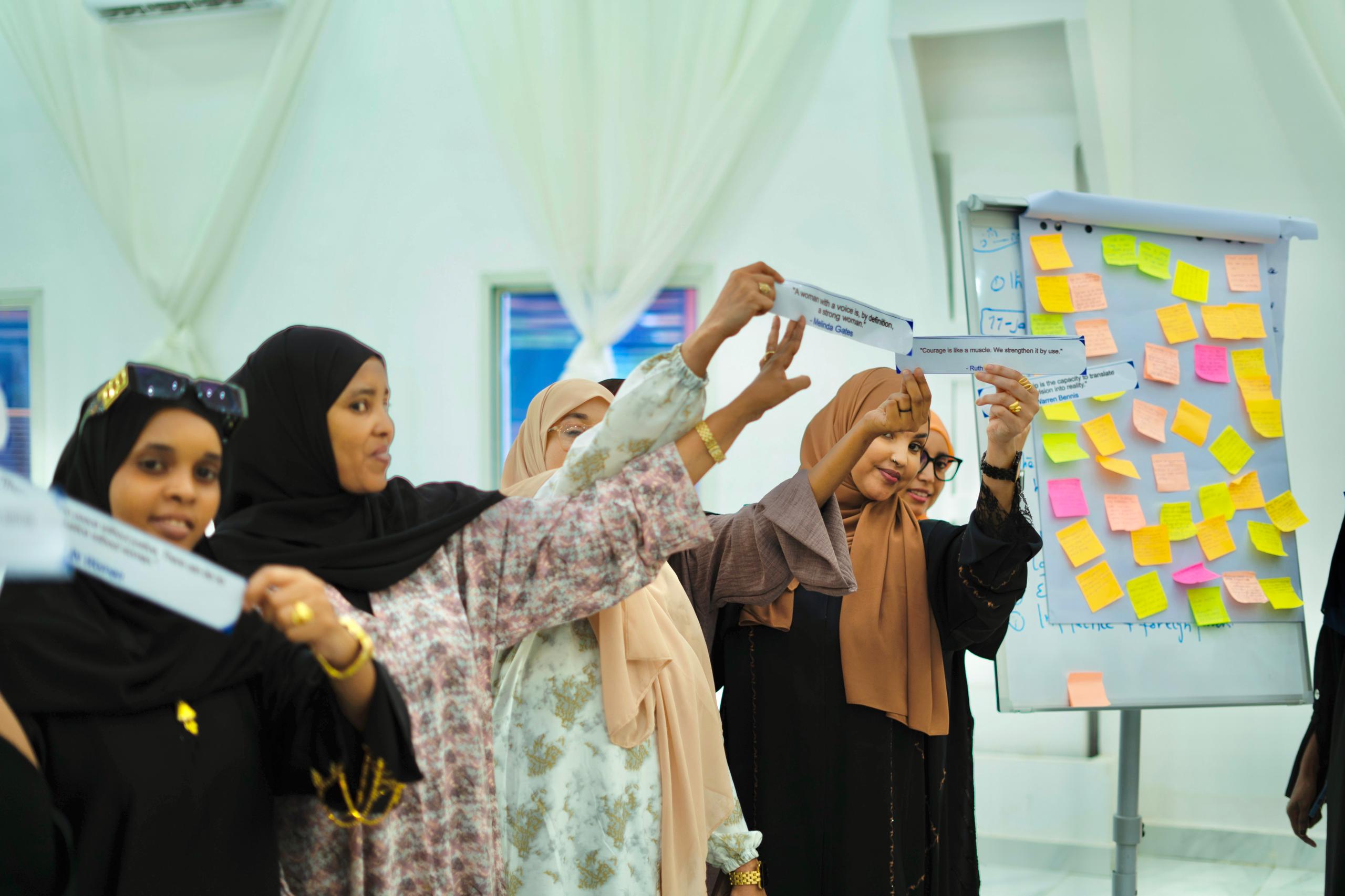
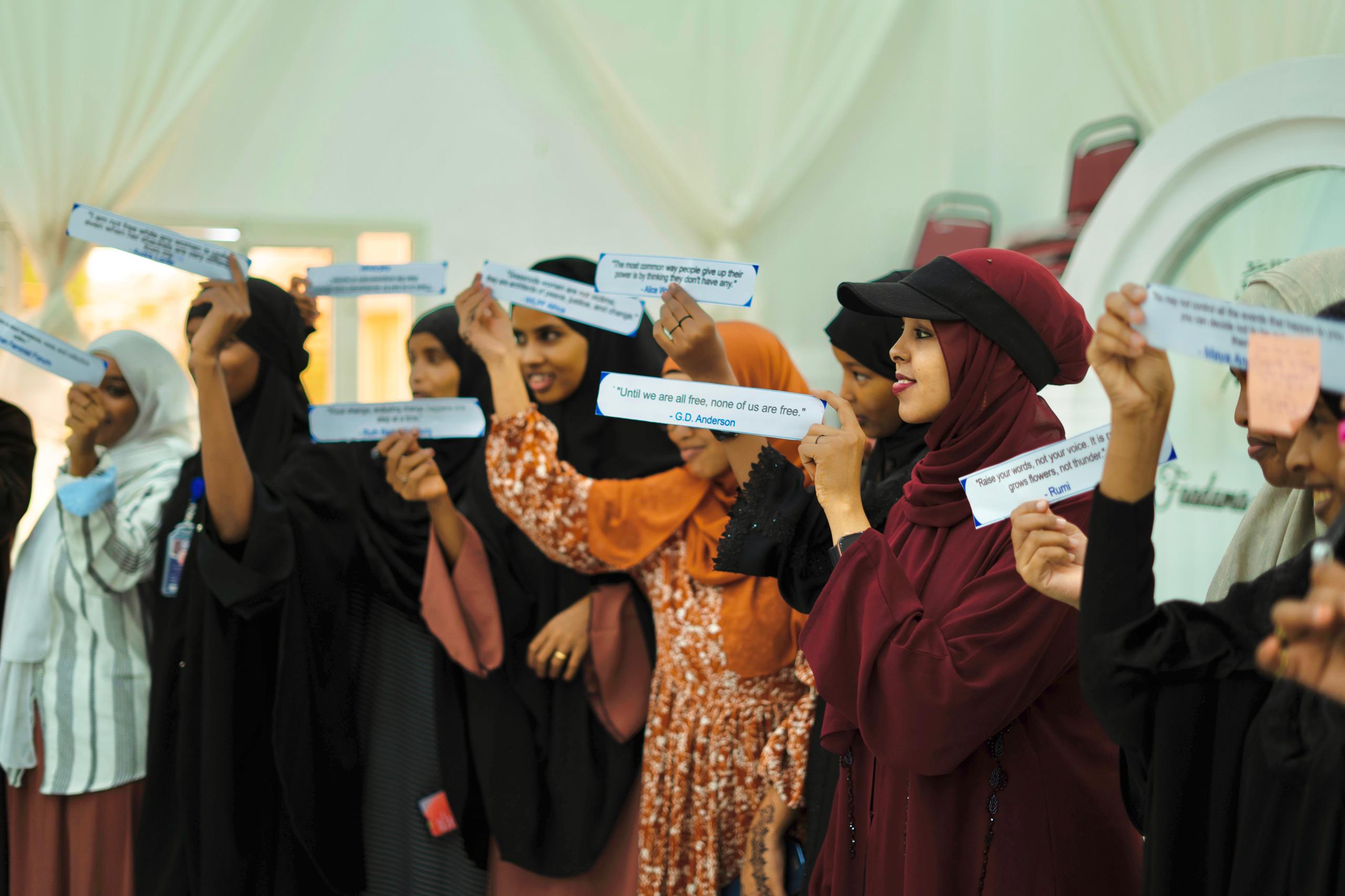
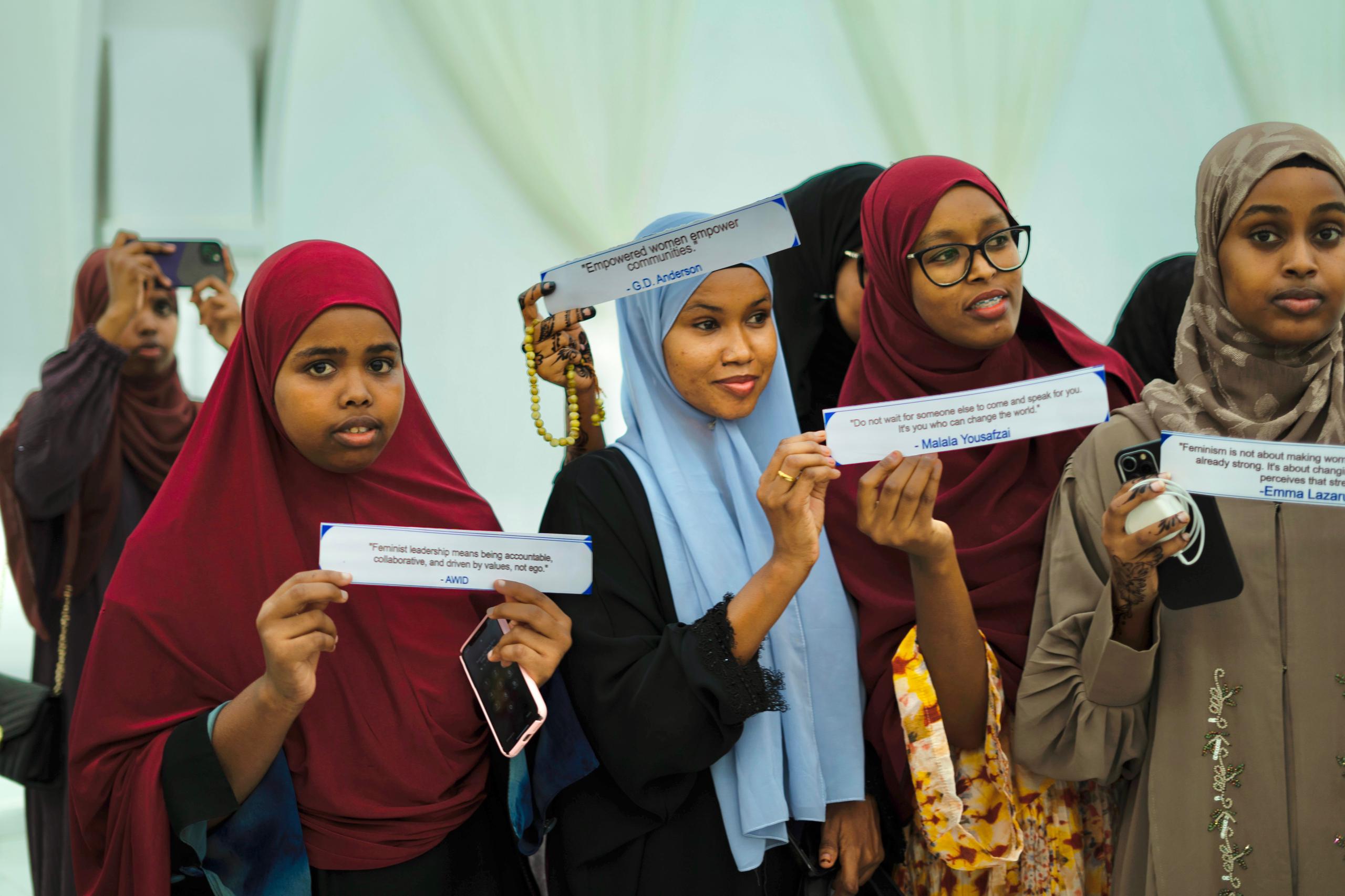
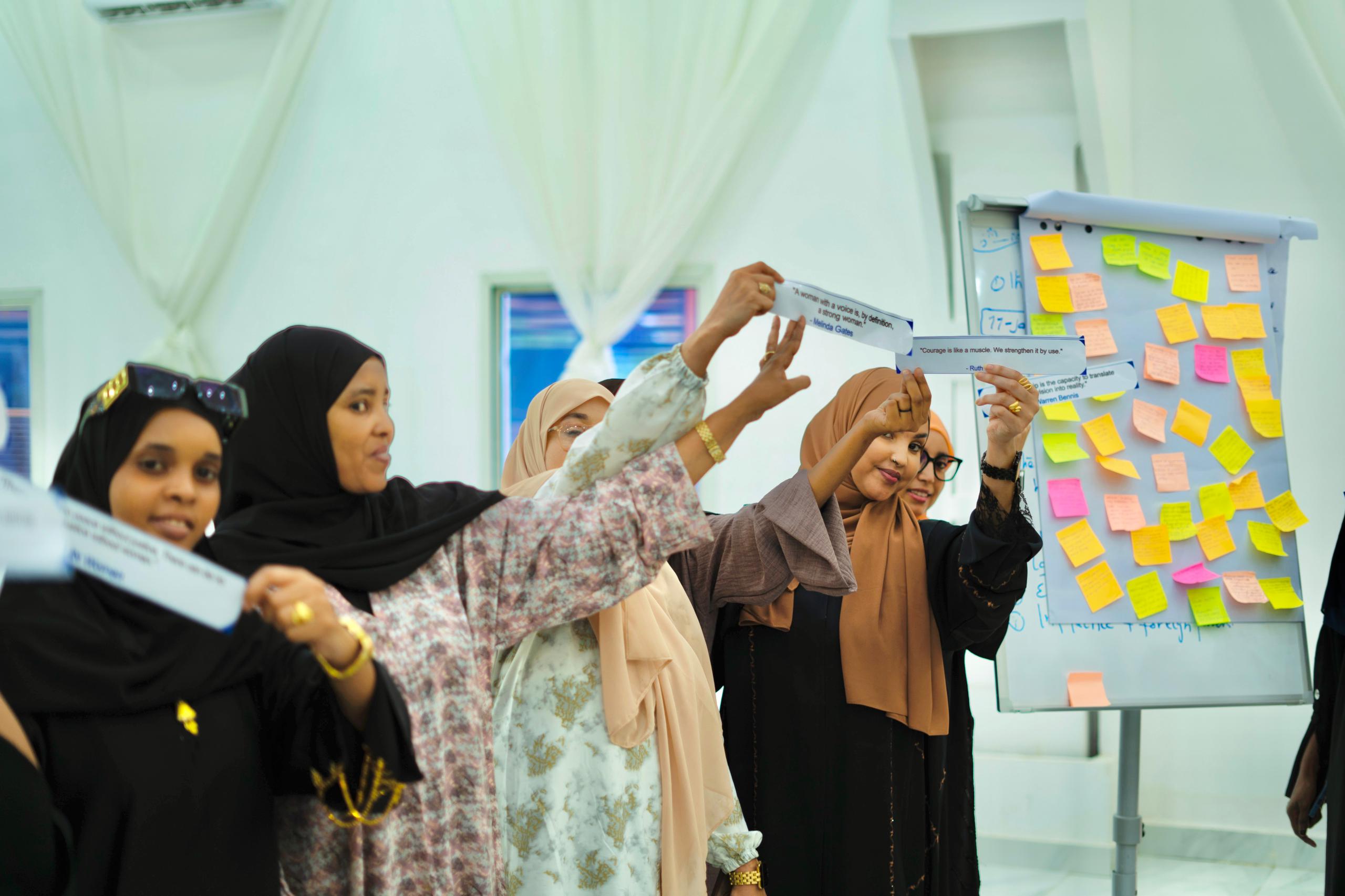
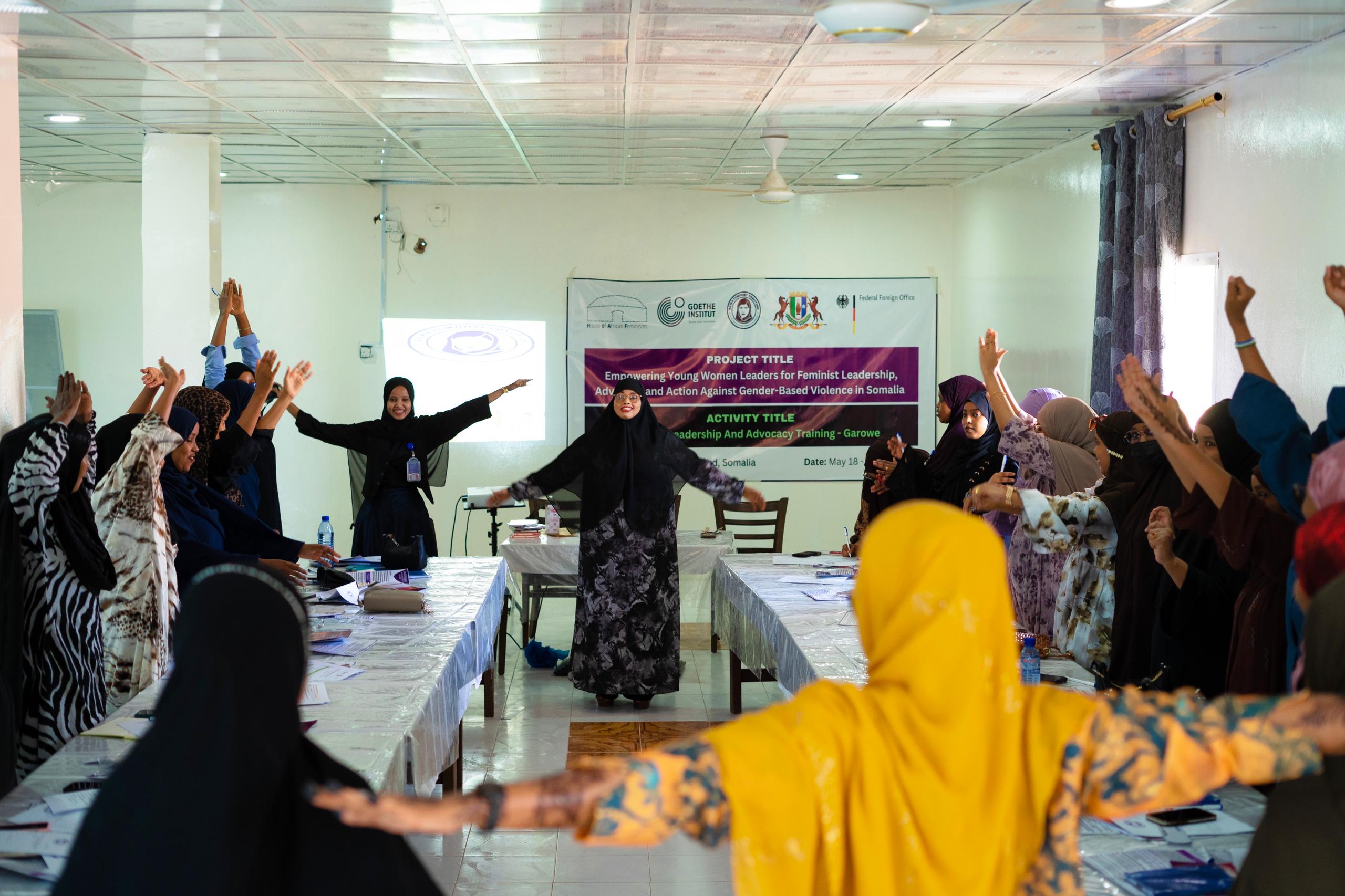
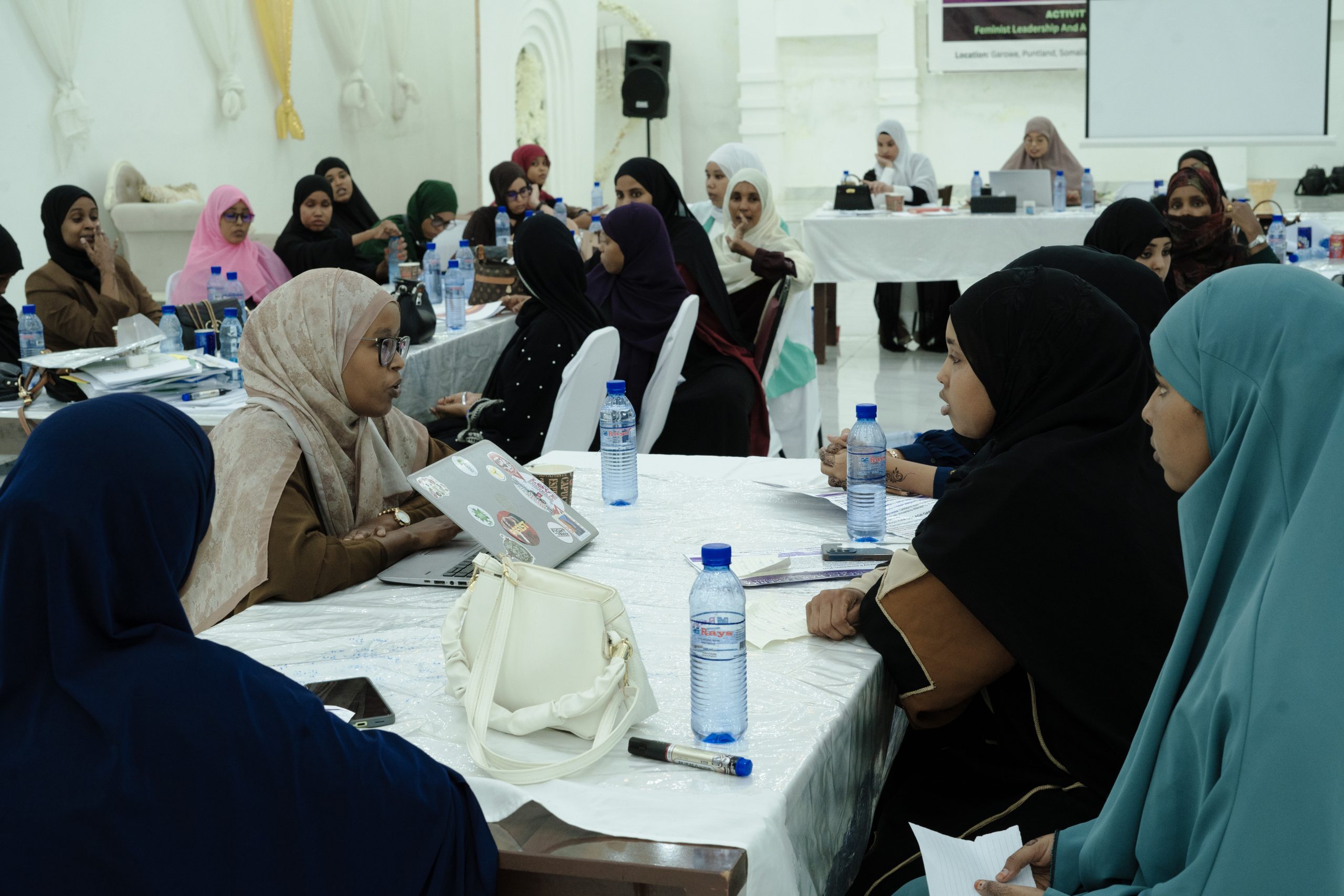
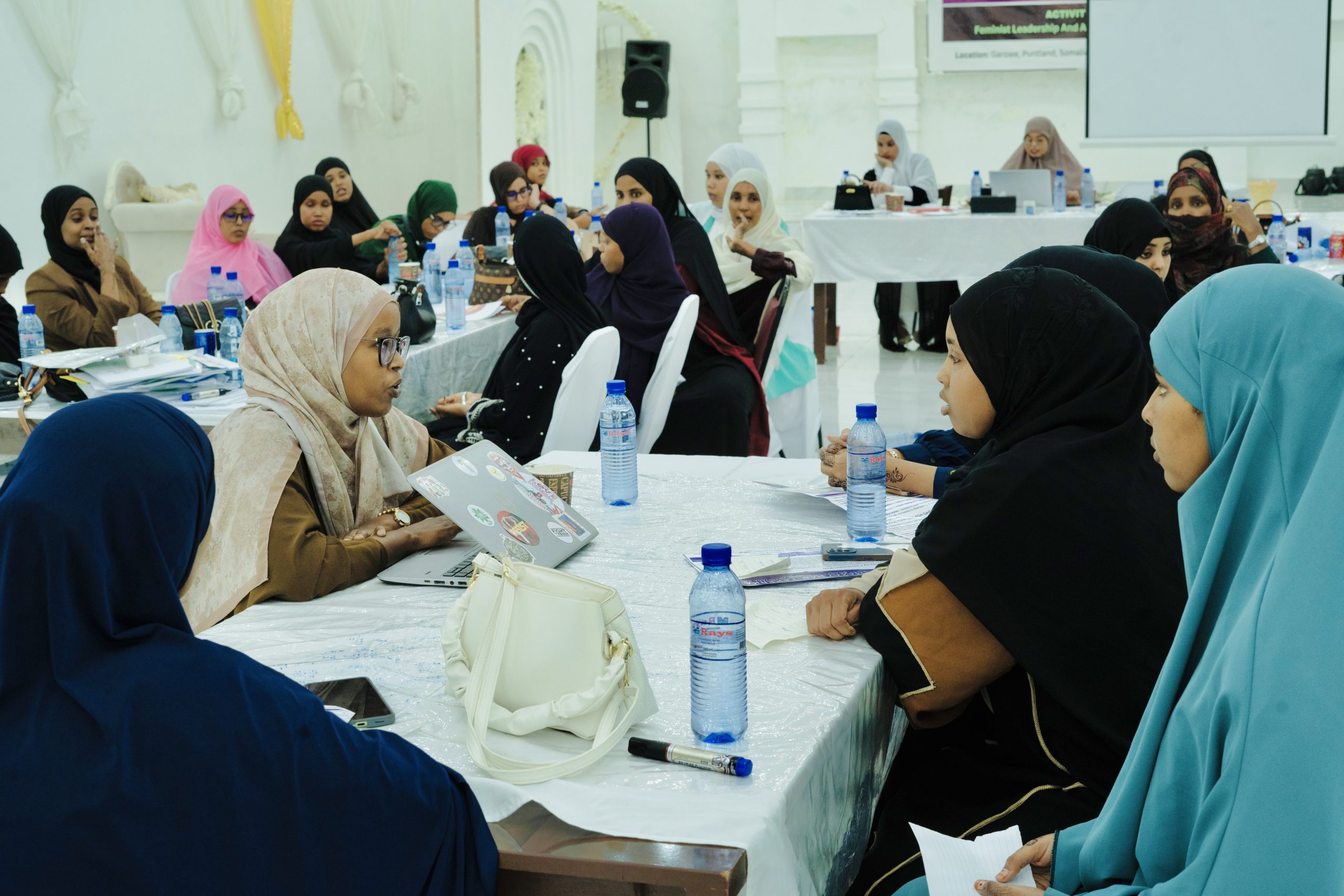
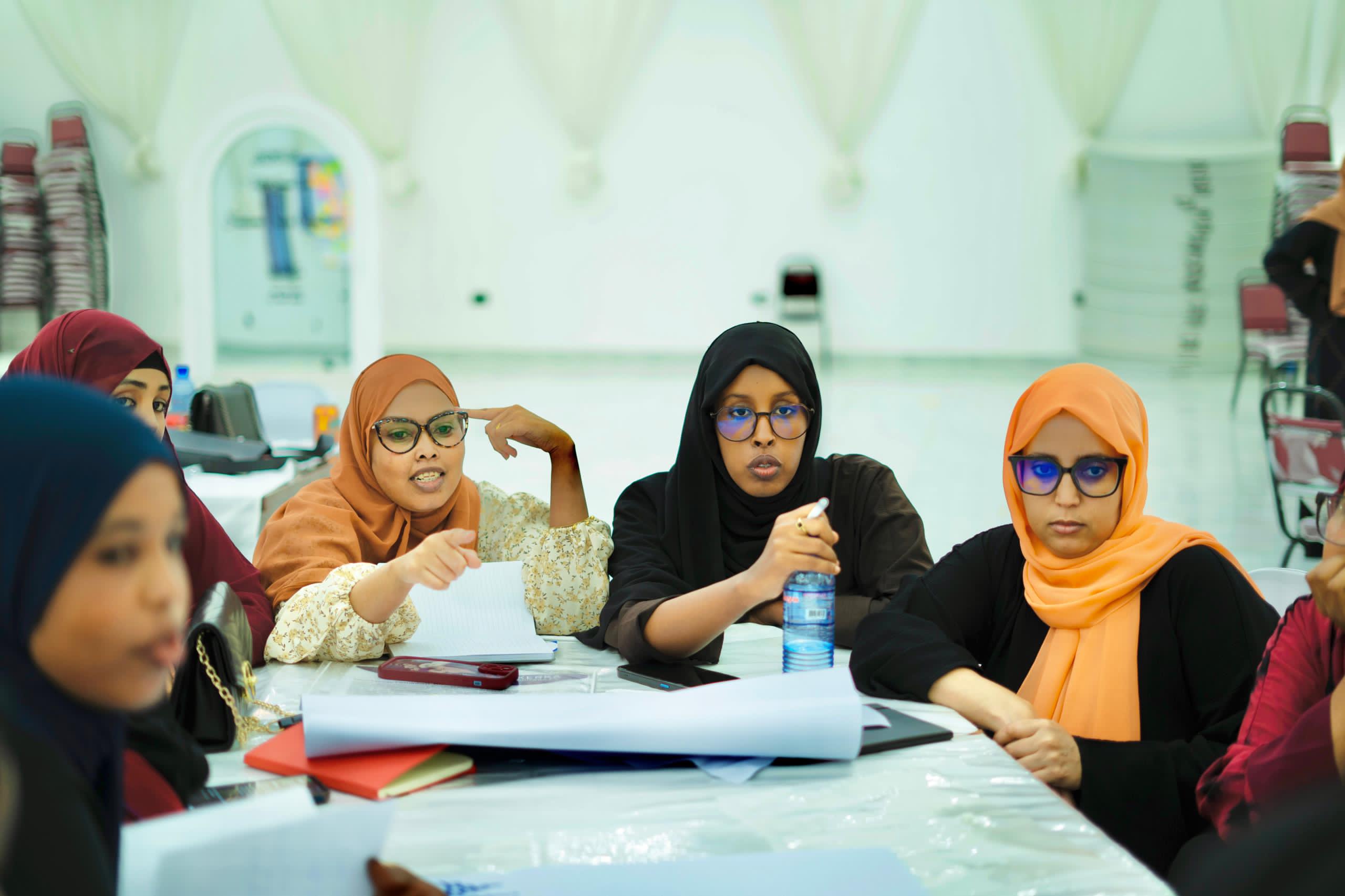
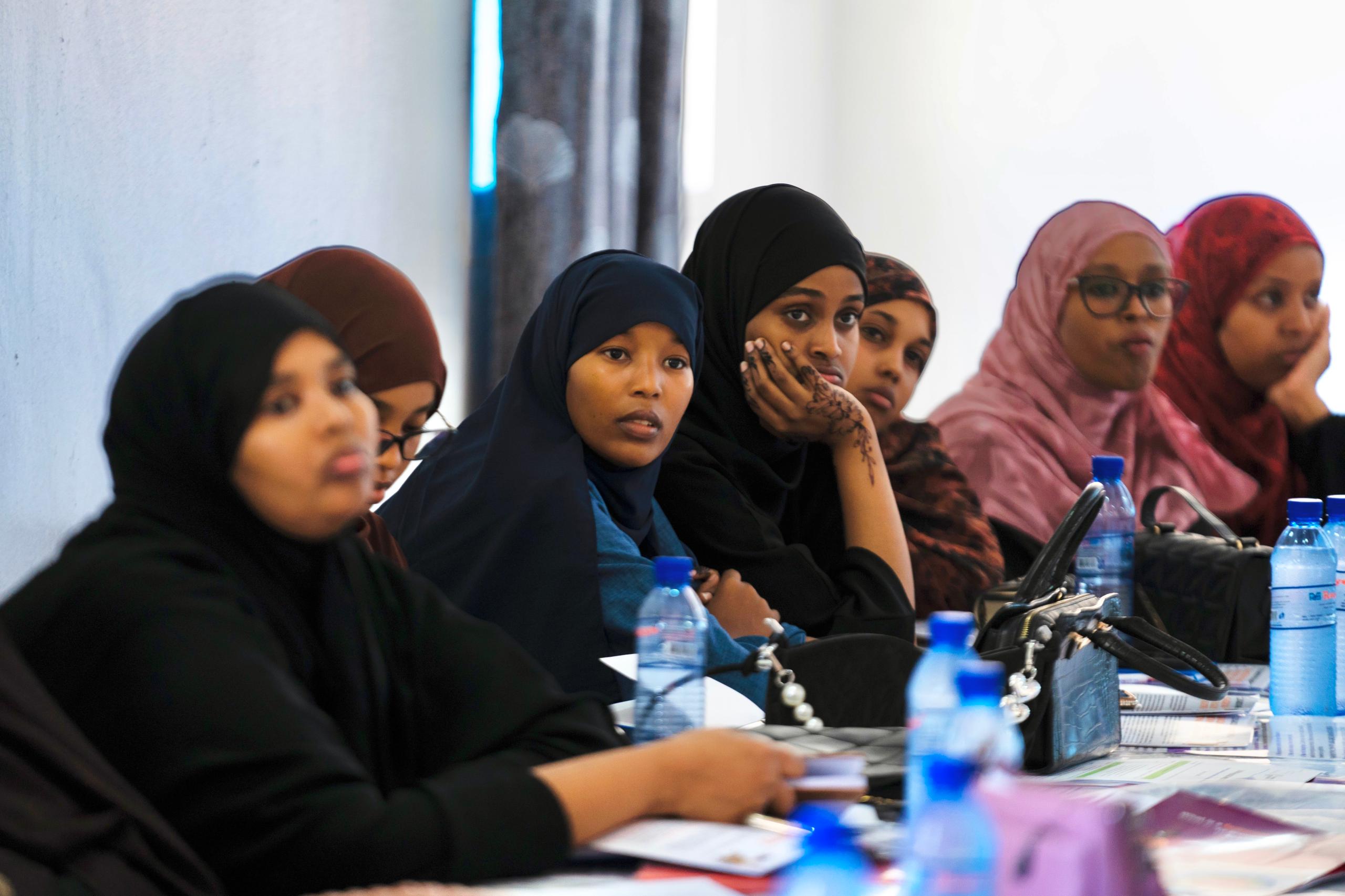
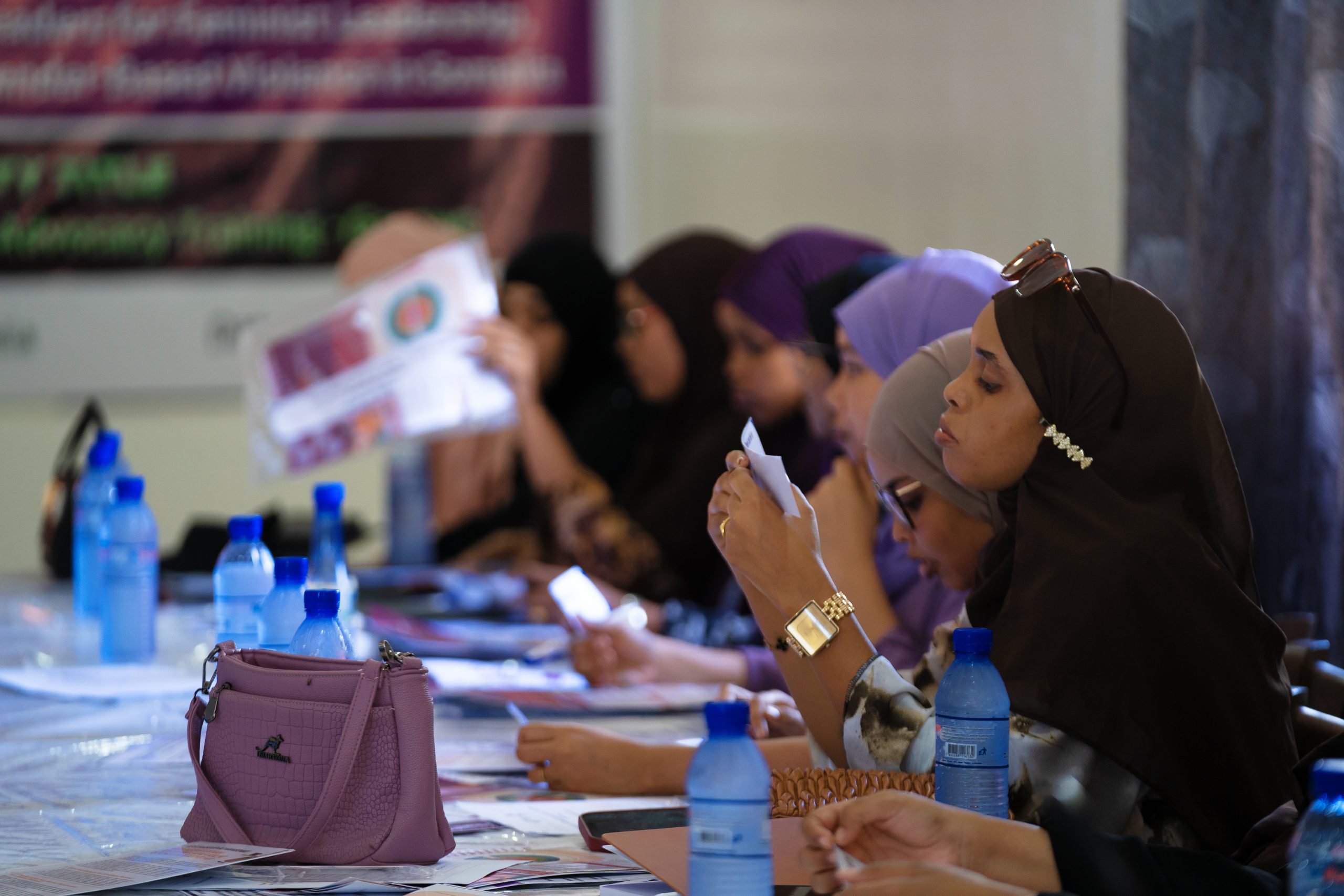
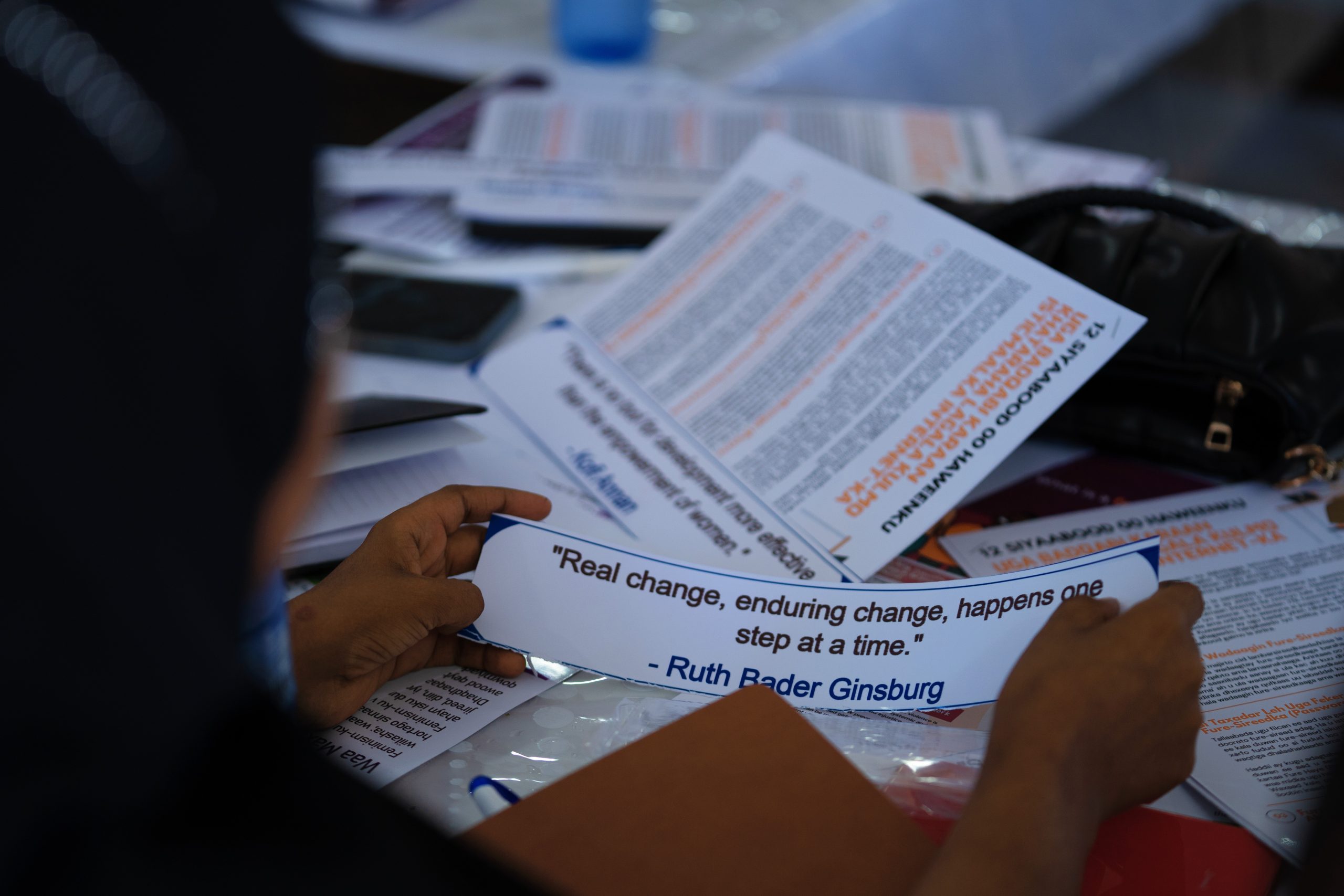
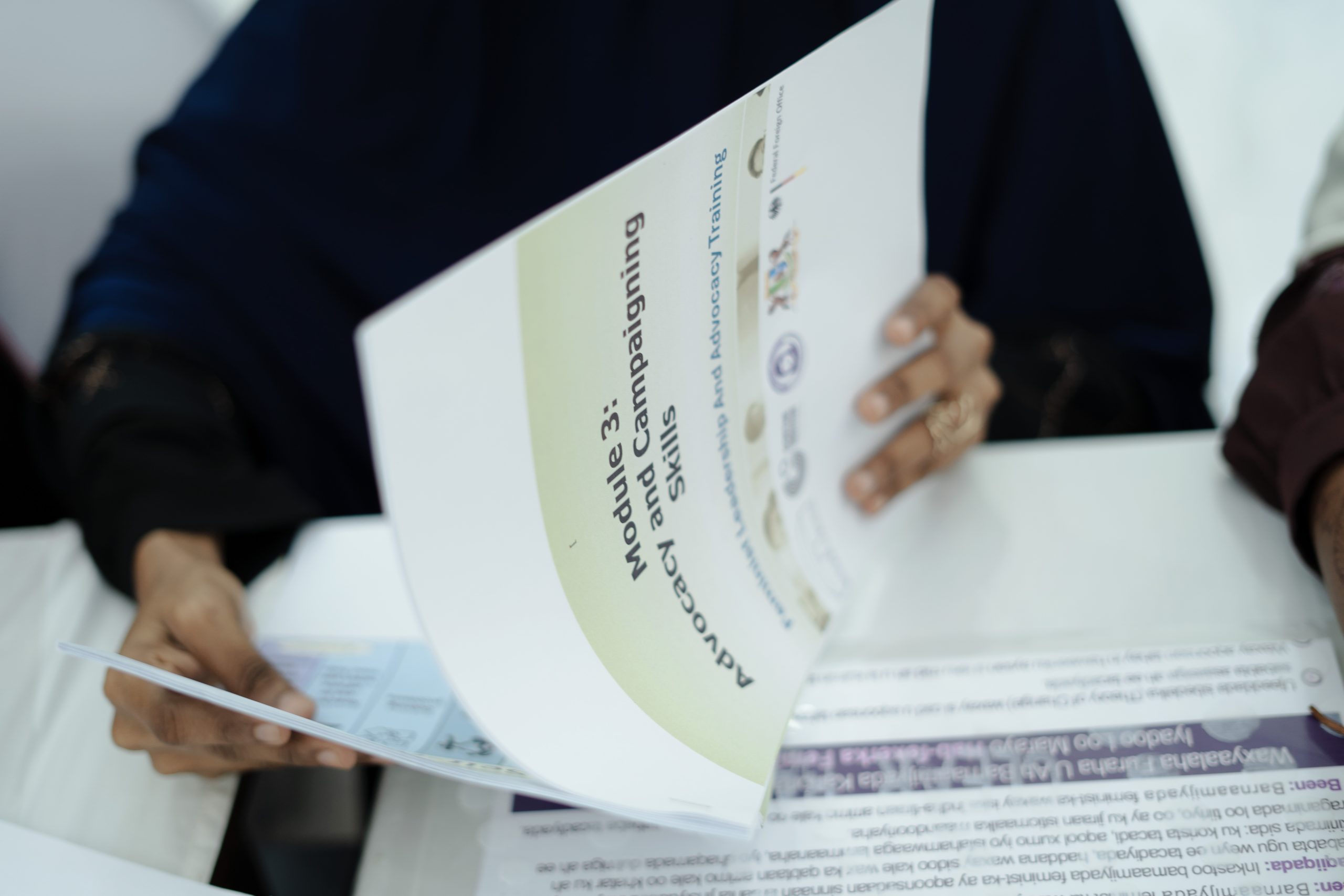
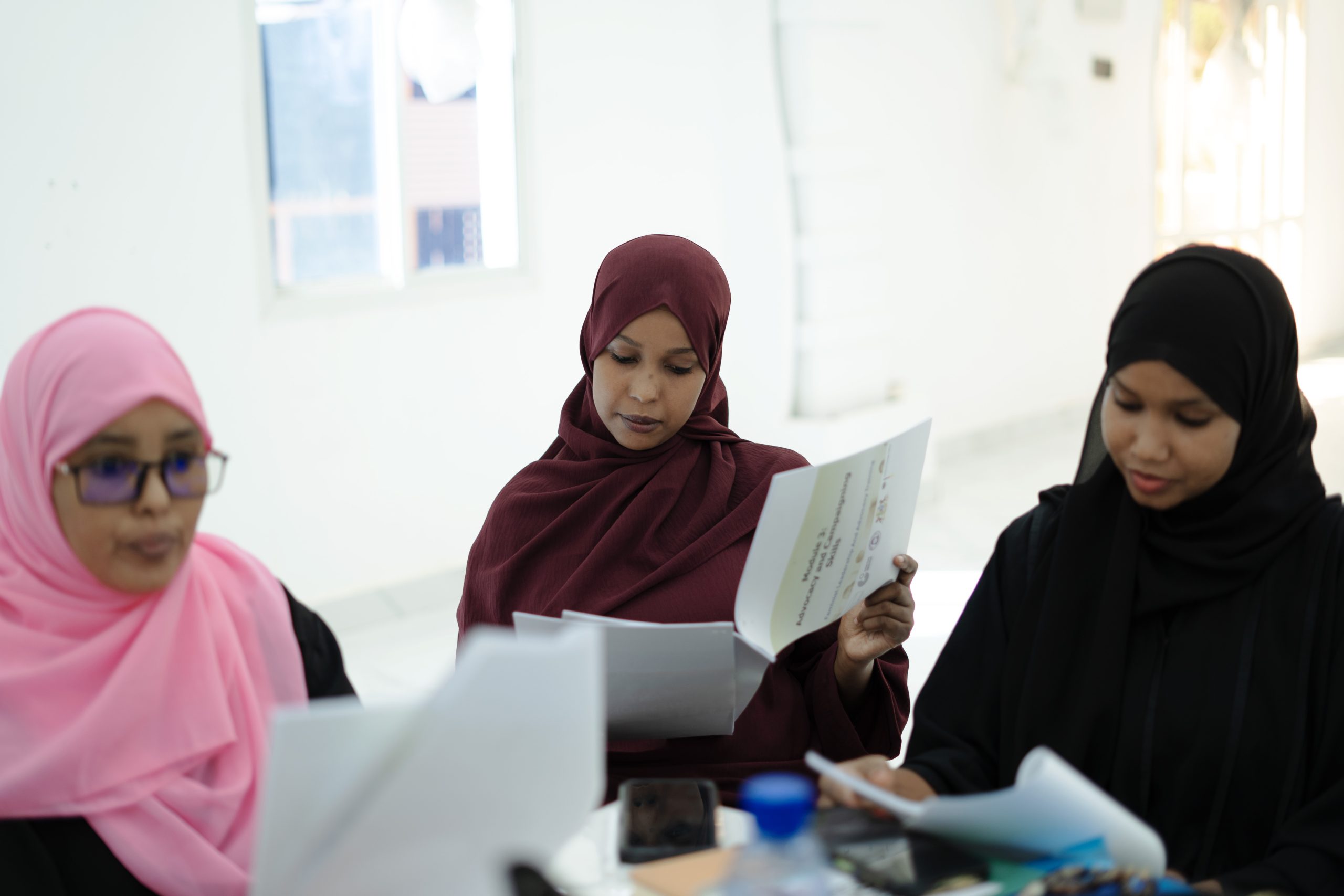
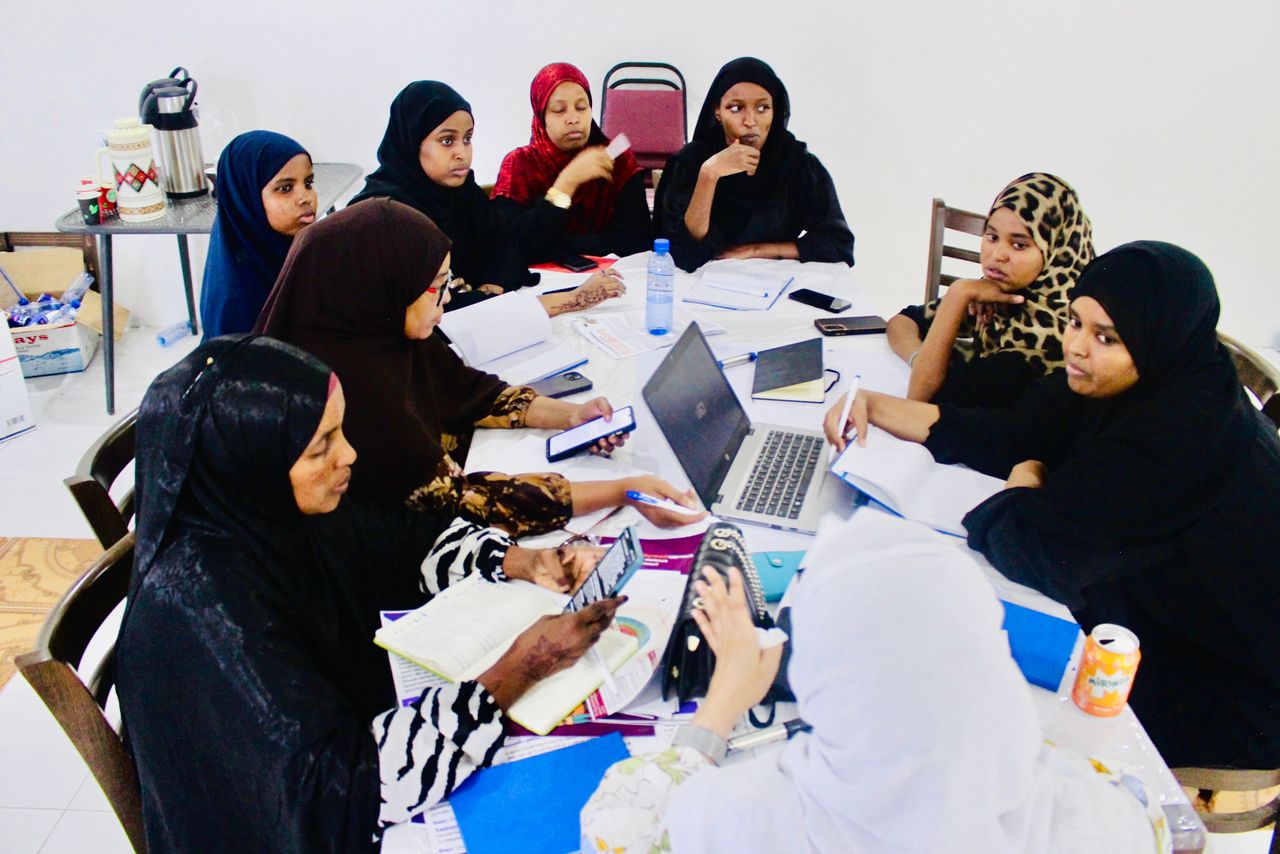
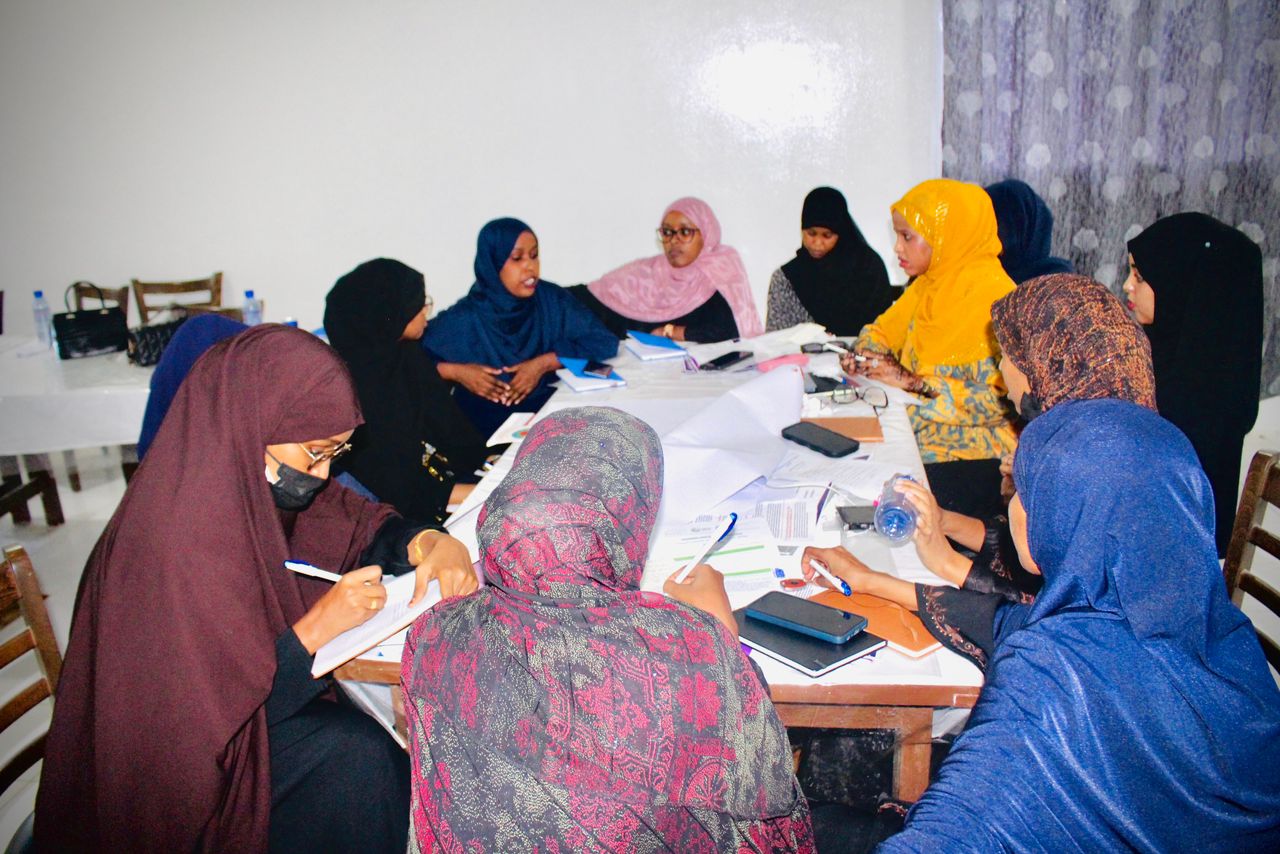
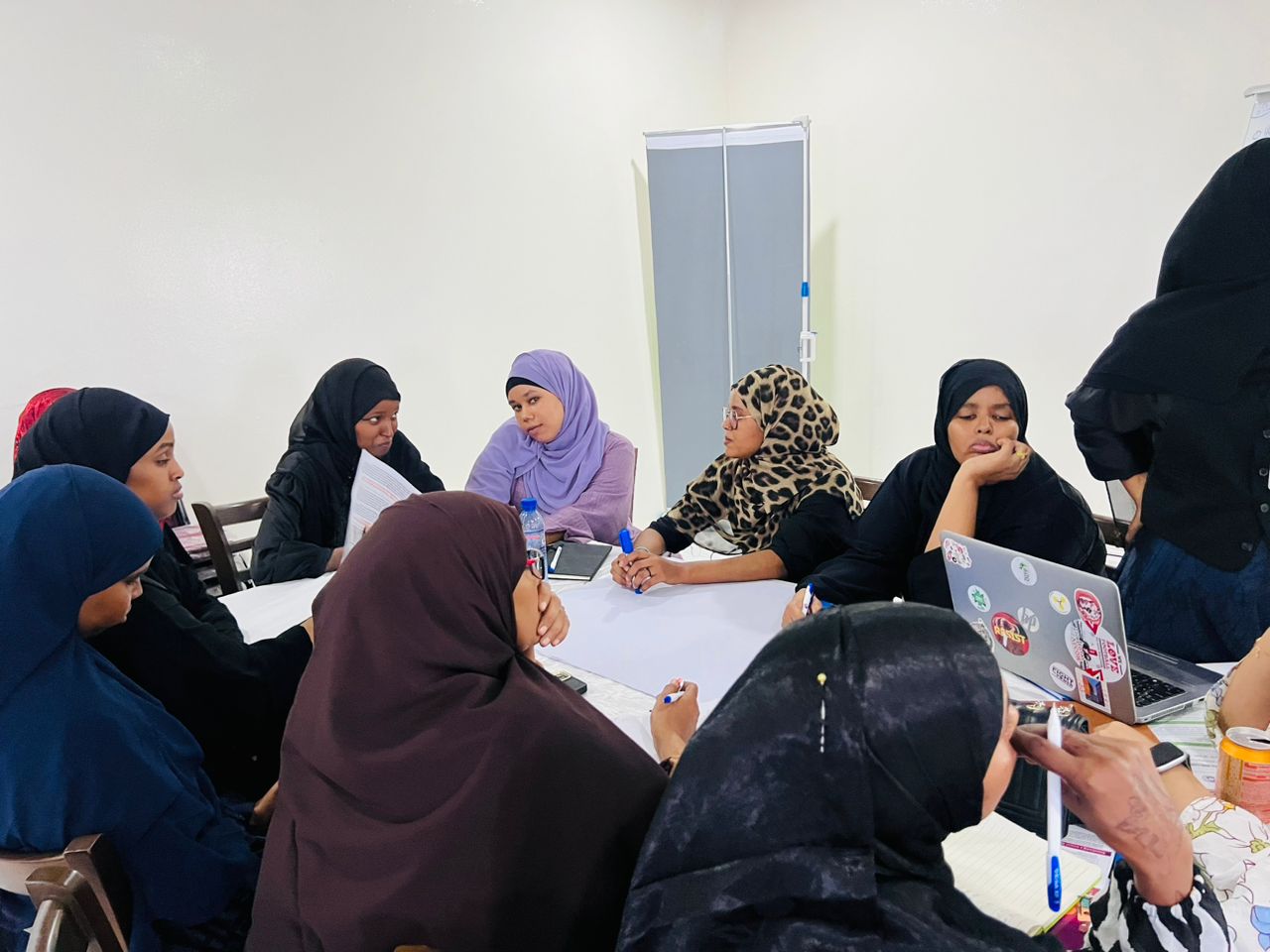
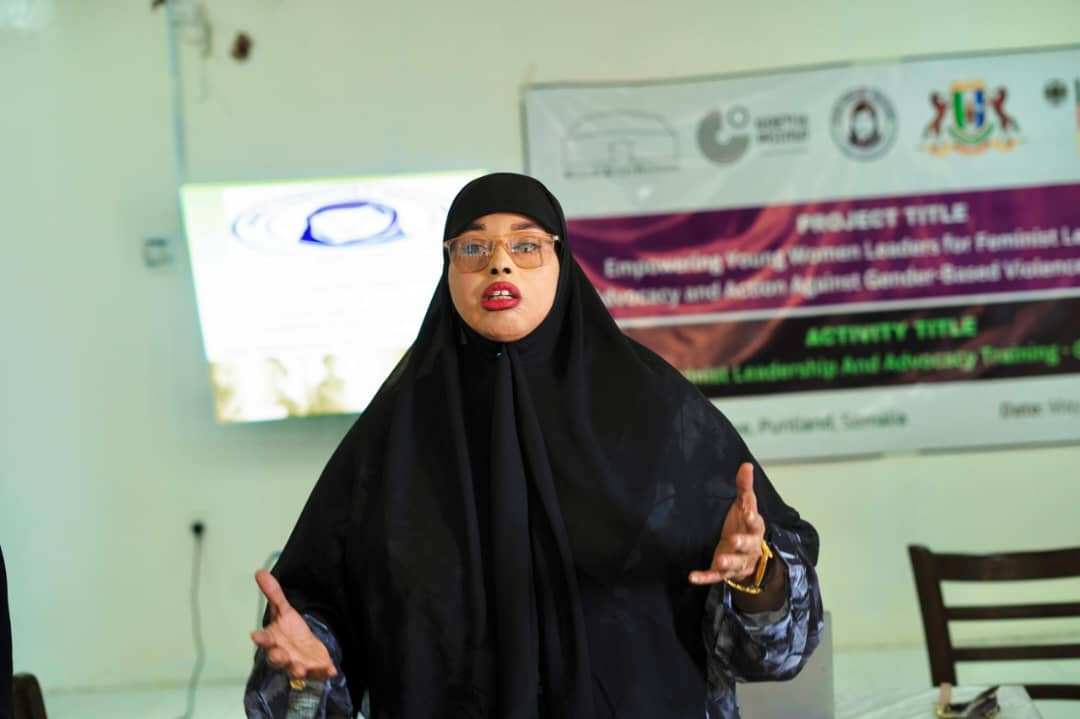
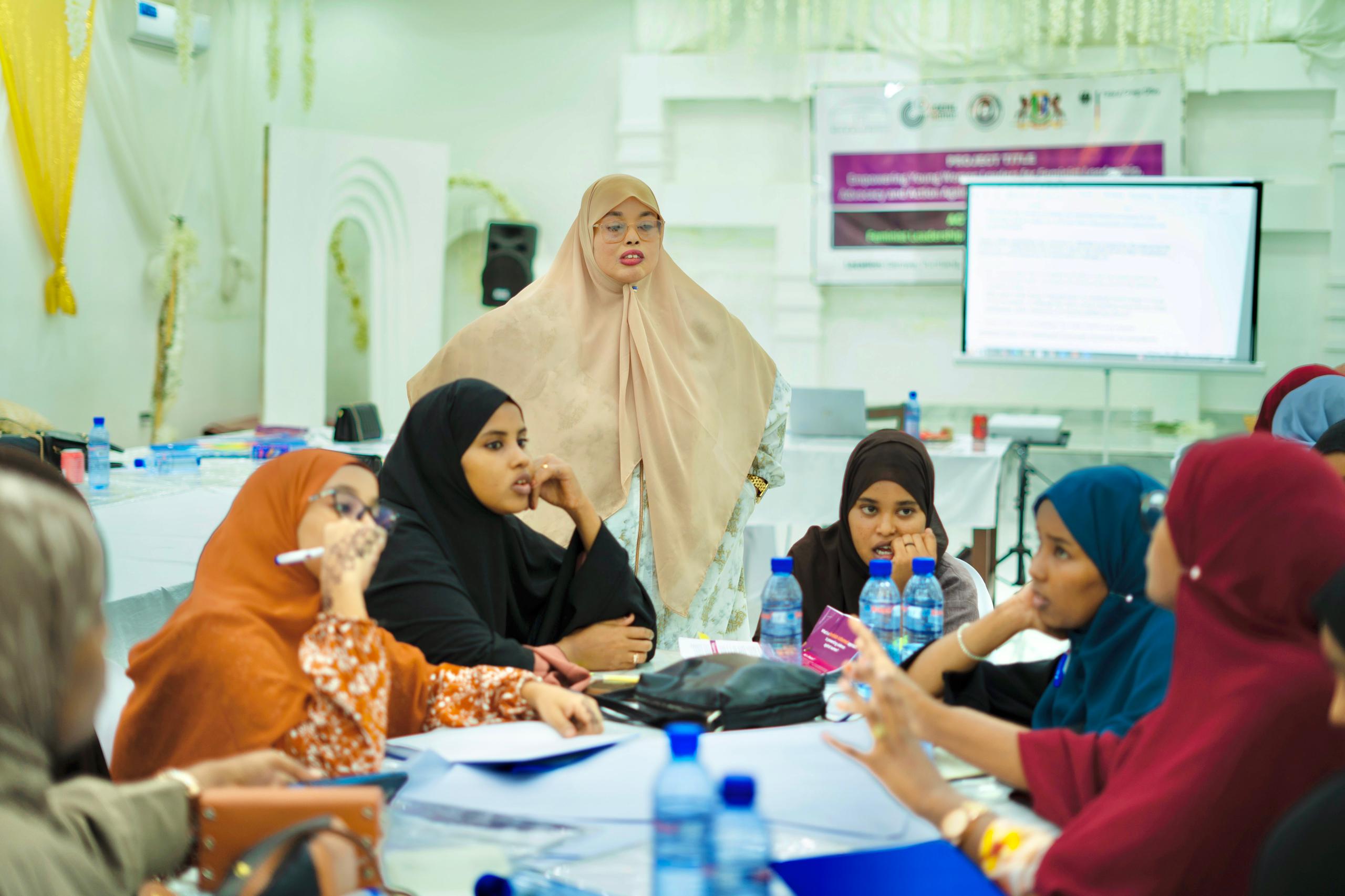
Hawa Feminist Coalition successfully delivered a three-day in-person Feminist Leadership and Advocacy Training in Garowe, Puntland, bringing together 35 emerging young women leaders from across Garowe city, with priority given to participants from internally displaced (IDP) and minority communities. Held from May 18 to May 20, 2025, the Garowe training forms part of a broader national program supported by the Goethe-Institut’s House of African Feminisms and funded by the German Federal Foreign Office, which aims to equip over 100 emerging young women across Somalia with feminist leadership, advocacy, and movement-building skills.
Somalia continues to face deeply rooted gender inequalities and persistently high levels of gender-based violence (GBV). While young women are increasingly stepping into leadership and activism roles, many still lack access to feminist leadership training, practical advocacy tools, and safe spaces for movement building. This training was designed to help close that gap by equipping participants with the skills, confidence, and solidarity networks needed to lead meaningful change and advance gender justice within their communities.
Who Participated
The training followed an open and transparent call for participants, inviting applications from young women aged 18–30 residing in Garowe, from both civil society and the private sector. Selection prioritized leadership potential, commitment to social change, and limited prior exposure to feminist leadership training—ensuring the program reached those who would benefit most.
What We Covered
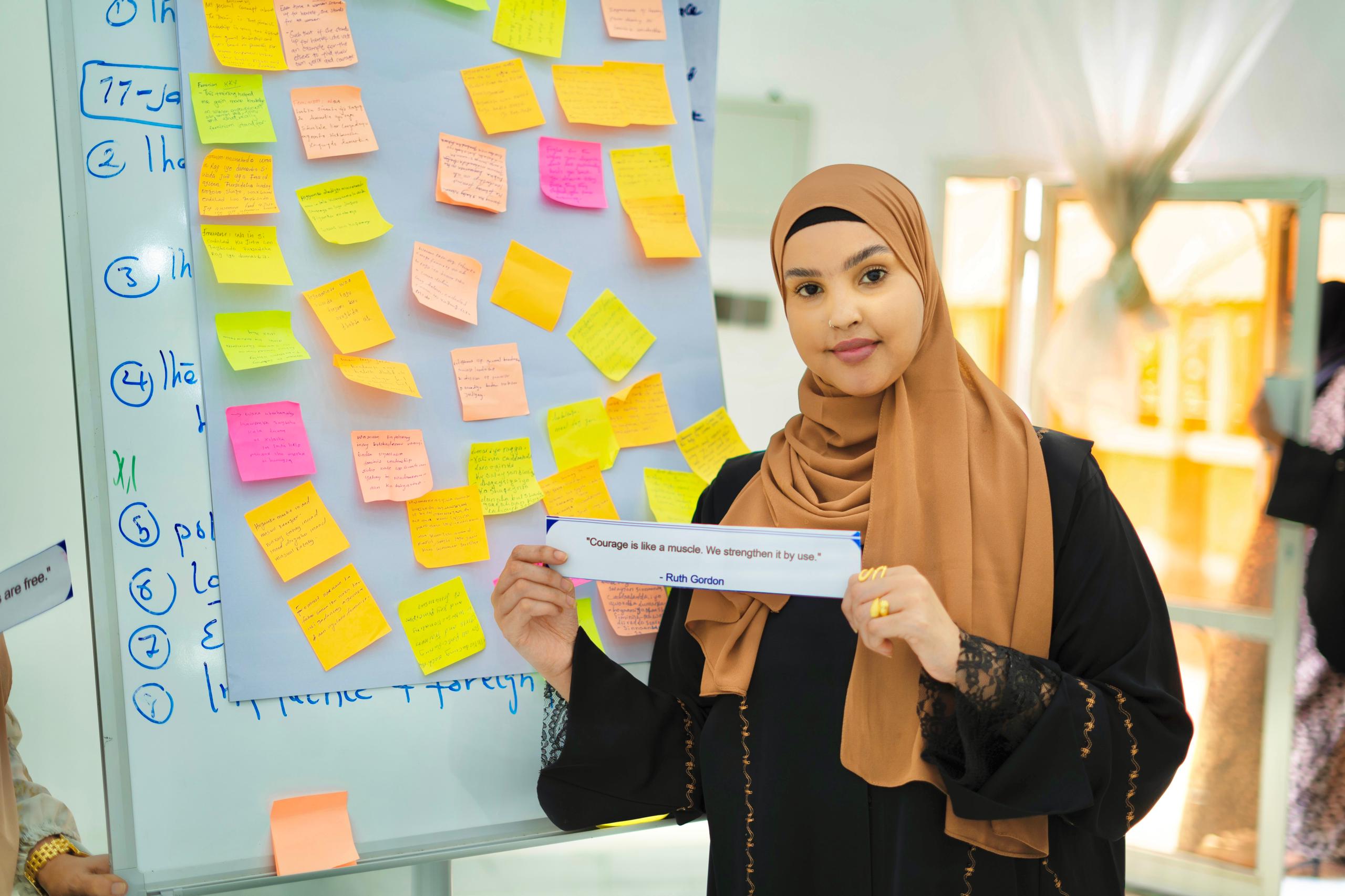
Grounded in feminist theory and practical application, the curriculum featured interactive sessions, discussions, and hands-on exercises across six core modules:
- Understanding Feminist Leadership – Principles and case studies from Somalia and across Africa
- Power & Intersectionality – Identifying power dynamics and practicing inclusive leadership
- Advocacy & Campaigning – Designing effective campaigns and engaging stakeholders
- Movement Building – Strategies for sustaining feminist movements, including Hawa Feminist Coalition’s own journey
- Feminist Approaches to Ending GBV – Community-based prevention and advocacy
- Peer Networking & Collaboration – Building coalitions for collective action
Responding directly to participant needs identified through pre-training surveys, Hawa Feminist Coalition also added a Digital Safety session—delivered voluntarily by Bareedo Platform Somalia—addressing online harassment, account security, and safe digital organizing. This session quickly became one of the most valued components of the training.
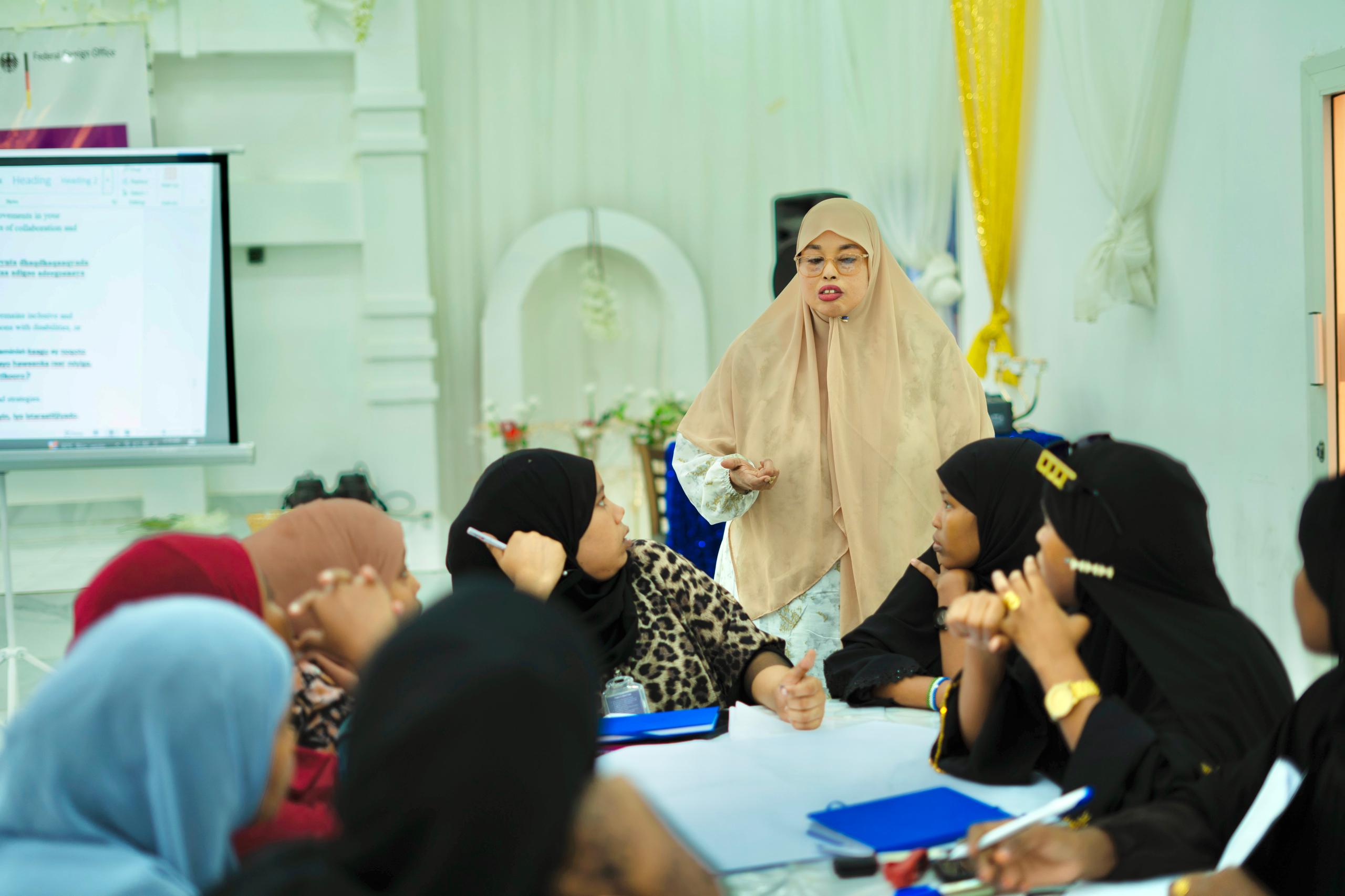
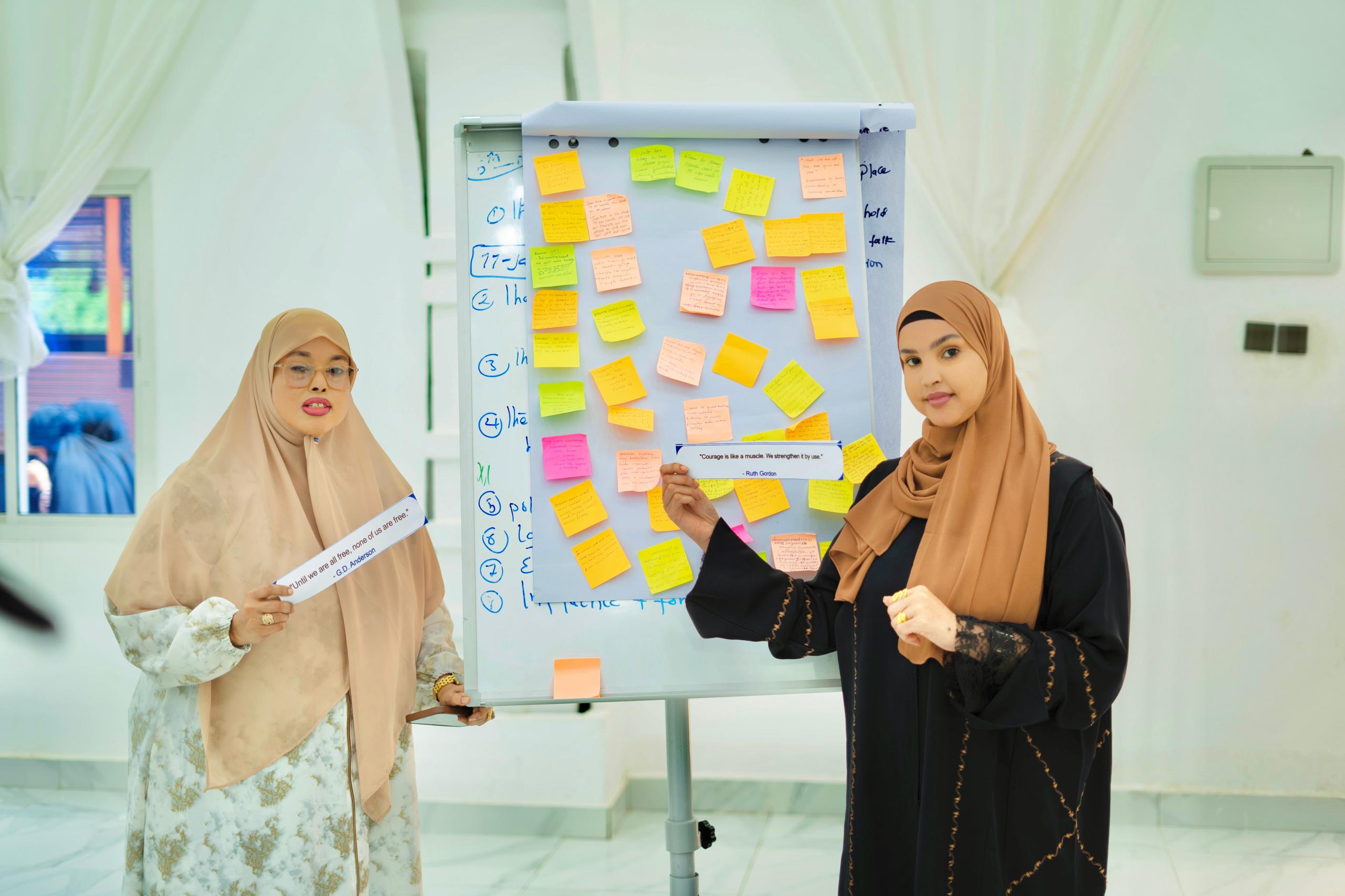
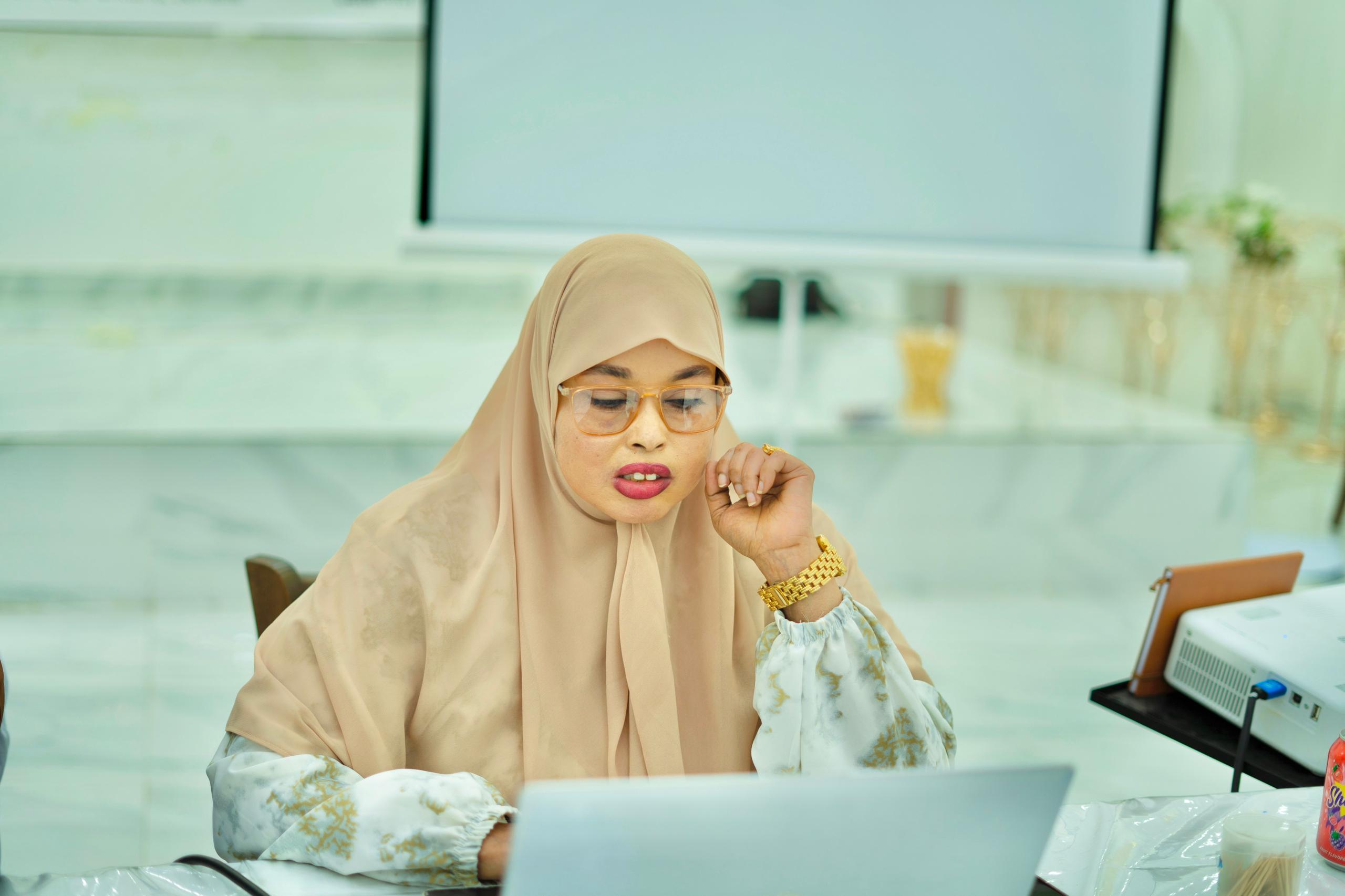
The training program was delivered by Mrs. Ifrah Abdinor Farah, a highly experienced feminist activist and trainer. Mrs. Ifrah Abdinor Farah is a renowned Somali feminist and women’s rights advocate with over 15 years of experience championing gender justice and addressing gender-based violence (GBV). Holding a Master’s degree in Women’s Rights, she has dedicated her career to empowering women and challenging systemic inequalities across Somalia.
Her facilitation combined deep feminist knowledge with practical, context-specific examples drawn from years of grassroots activism and policy engagement. Participants consistently highlighted her ability to create a safe, inclusive, and inspiring learning environment—one that encouraged open dialogue, critical reflection, and collective learning. Through her leadership, the training moved beyond theory, equipping young women with the confidence and tools to apply feminist principles in real-life advocacy and community action.
Learning, Solidarity, and Action: Participants Share Their Experiences
At the end of the training, participants reported increased confidence and strengthened practical skills to lead with a feminist and intersectional lens, design and implement grassroots advocacy initiatives, engage policymakers and community leaders on issues of GBV and gender justice, and build peer networks that contribute to a broader feminist movement.
The impact of the Garowe Feminist Leadership and Advocacy Training was powerfully reflected in the voices of the young women who participated. Many described the experience as transformative—not only for the skills they gained, but also for the confidence, solidarity, and renewed sense of belonging to a wider feminist movement it fostered.
Participants highlighted how learning about power, intersectionality, and feminist leadership helped them better understand their own experiences and sharpen their advocacy work:
The addition of the Digital Safety session resonated strongly with participants, many of whom engage in activism online and face increasing harassment:
Beyond skills and knowledge, the training fostered a deep sense of connection and solidarity among participants. A WhatsApp peer network was established to sustain collaboration beyond the training, and many participants also joined Hawa Feminist Coalition’s growing Young Feminist Activists community, connecting them to ongoing mentorship, collective solidarity, and national-level advocacy efforts.
Several participants also expressed a strong desire to translate their learning into action, calling for continued support to sustain and scale their advocacy efforts:
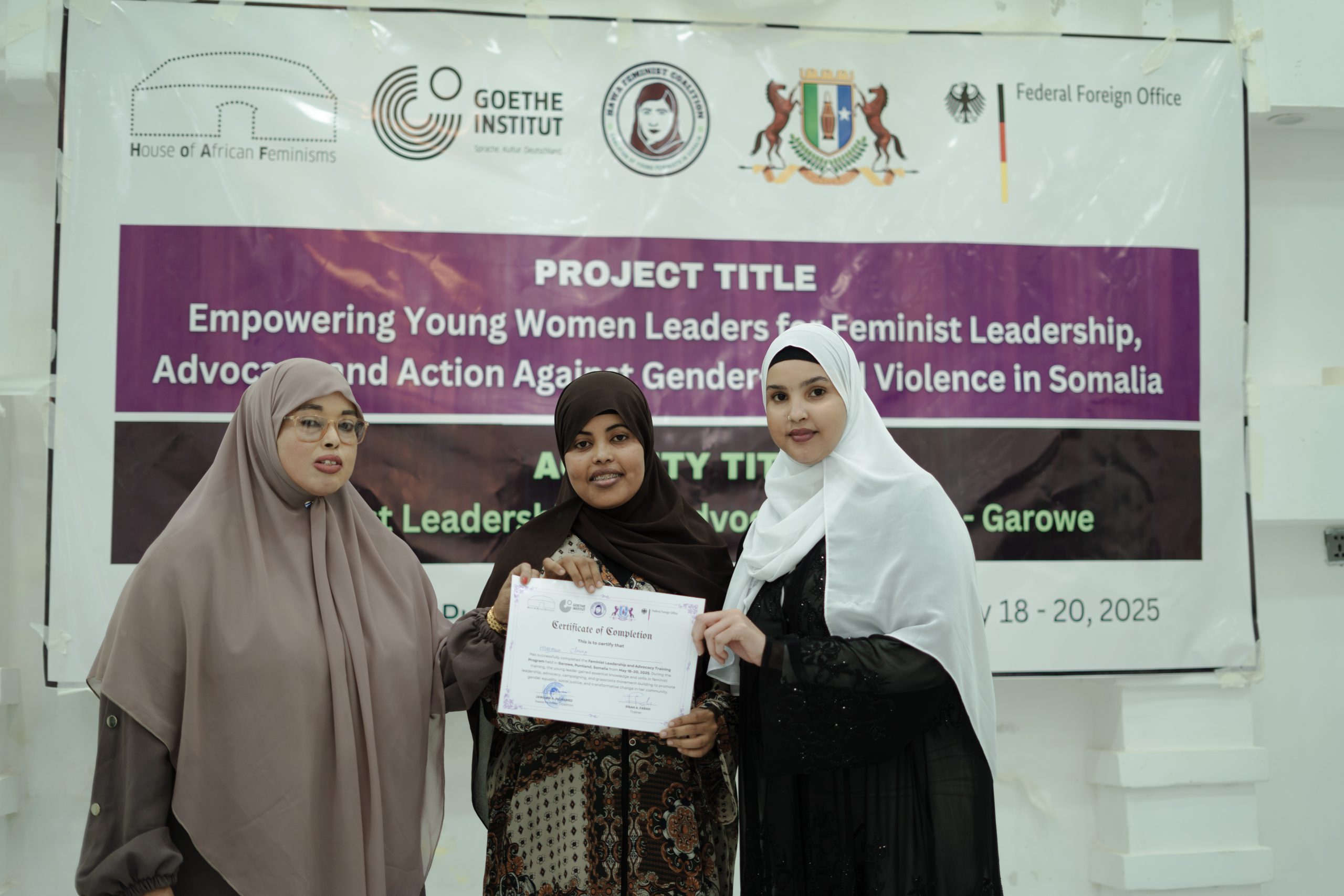
The training concluded successfully, achieving its intended objectives by equipping young women leaders with feminist leadership and advocacy skills that they can apply in leading grassroots activism and promoting gender justice across Somalia. Upon successful completion of the three-day training, Hawa Feminist Coalition awarded certificates of completion to all participants.
Looking Ahead
The training held in Garowe marked the first cohort of a broader national initiative that includes a second in-person cohort training to be held in Mogadishu, a nationwide online cohort, and a Community Engagement and Solidarity Event to be held during the 16 Days of Activism Against GBV. Together, these interconnected efforts aim to strengthen feminist leadership, amplify marginalized voices, advance collective action to end gender-based violence as well as promote gender justice across Somalia.
Hawa Feminist Coalition will continue to engage the trained young women leaders and connect them with other young women peers working on similar initiatives across Somalia through dedicated WhatsApp groups and ongoing network-building efforts.
Together, we are building a powerful feminist movement—rooted in solidarity, justice, and the leadership of young women.