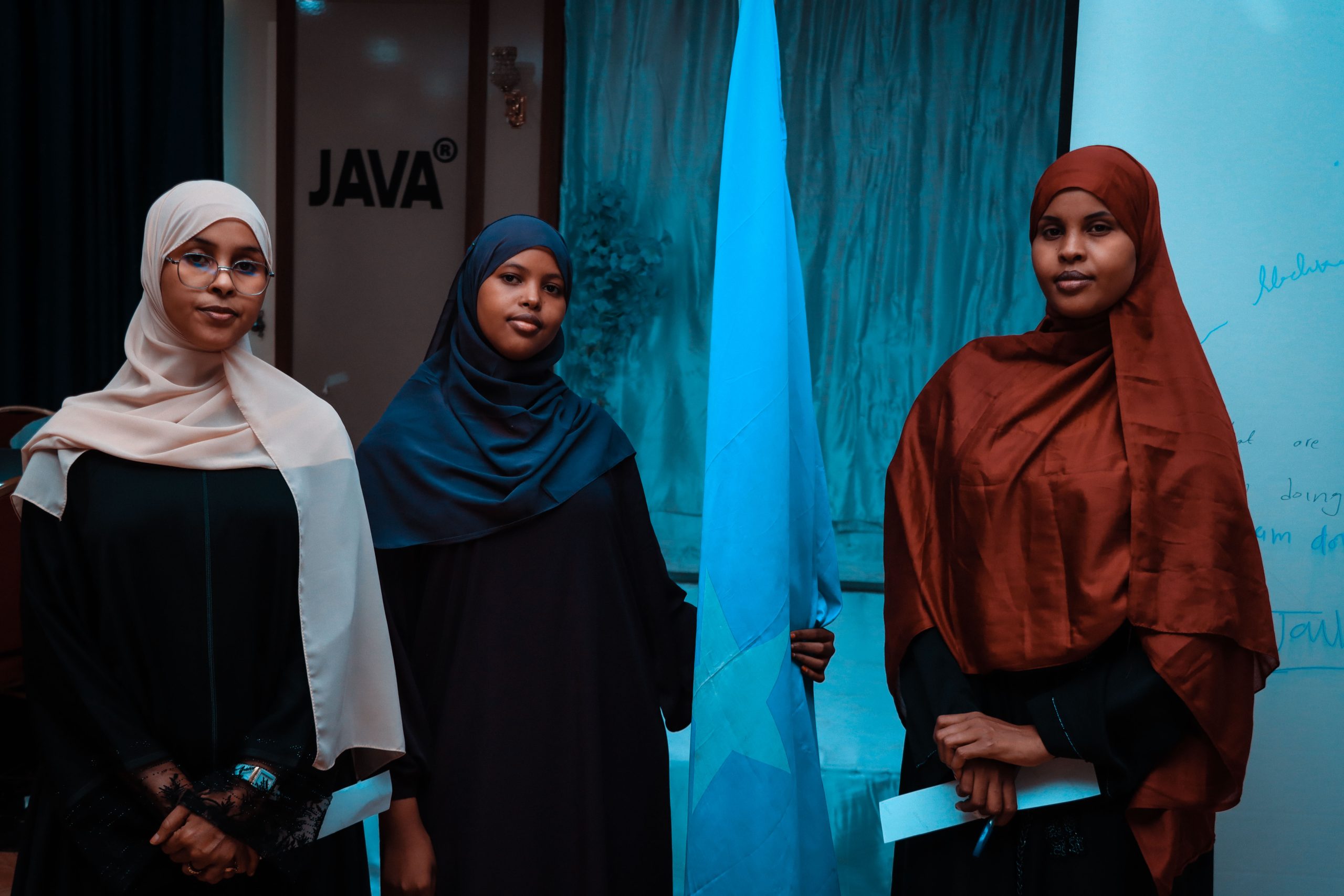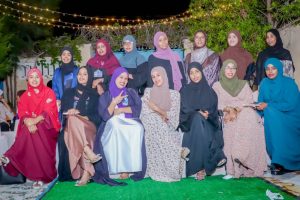
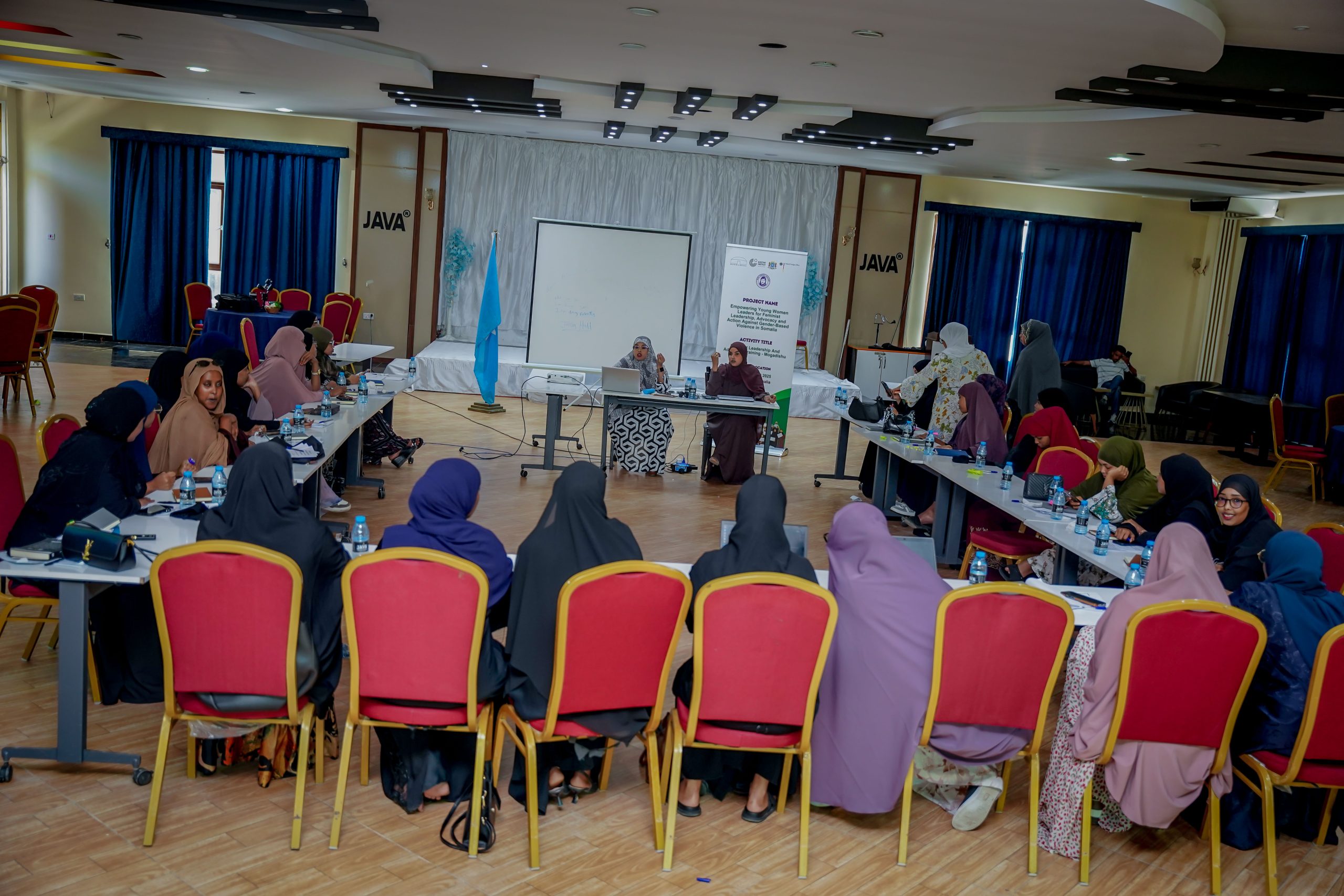
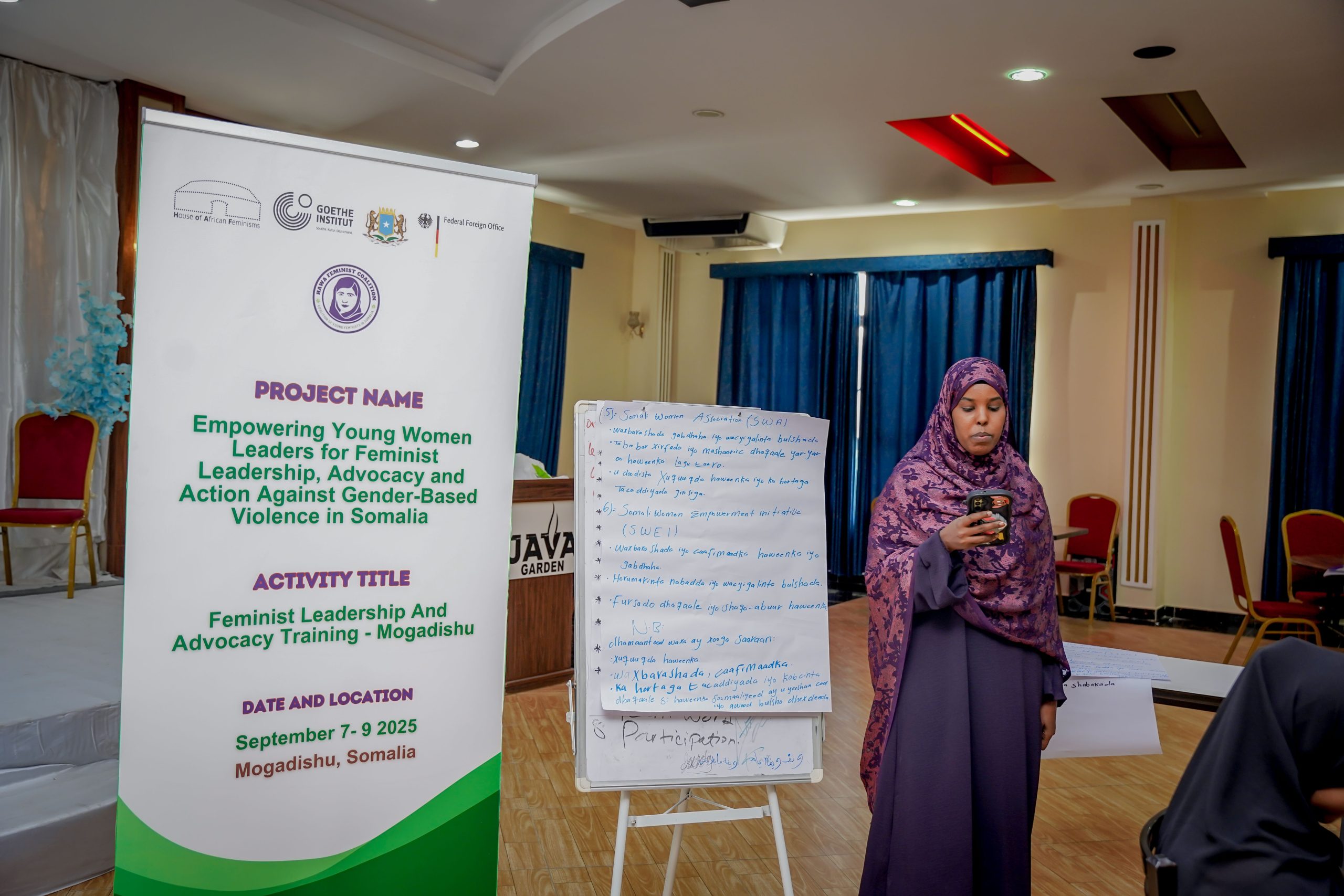
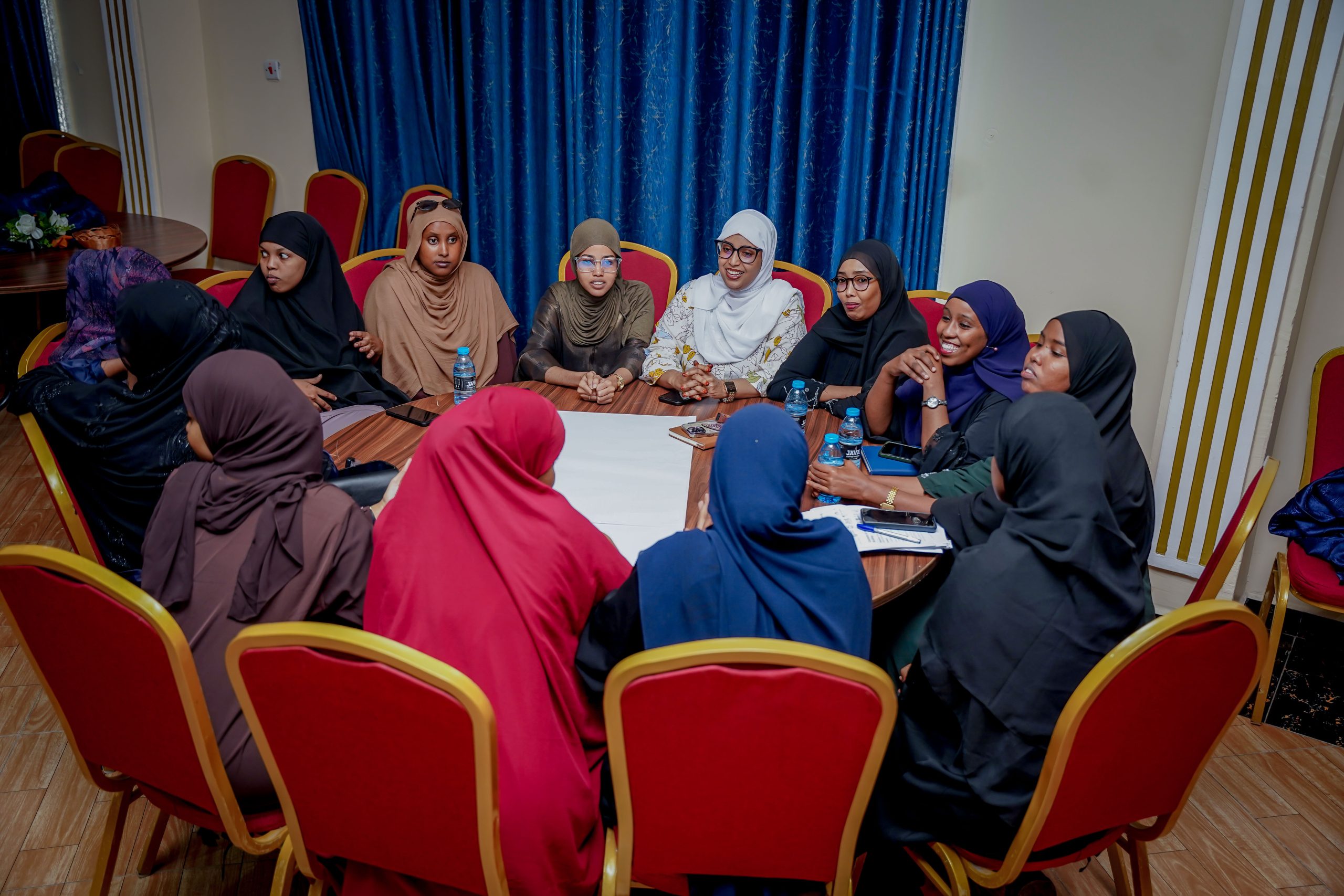
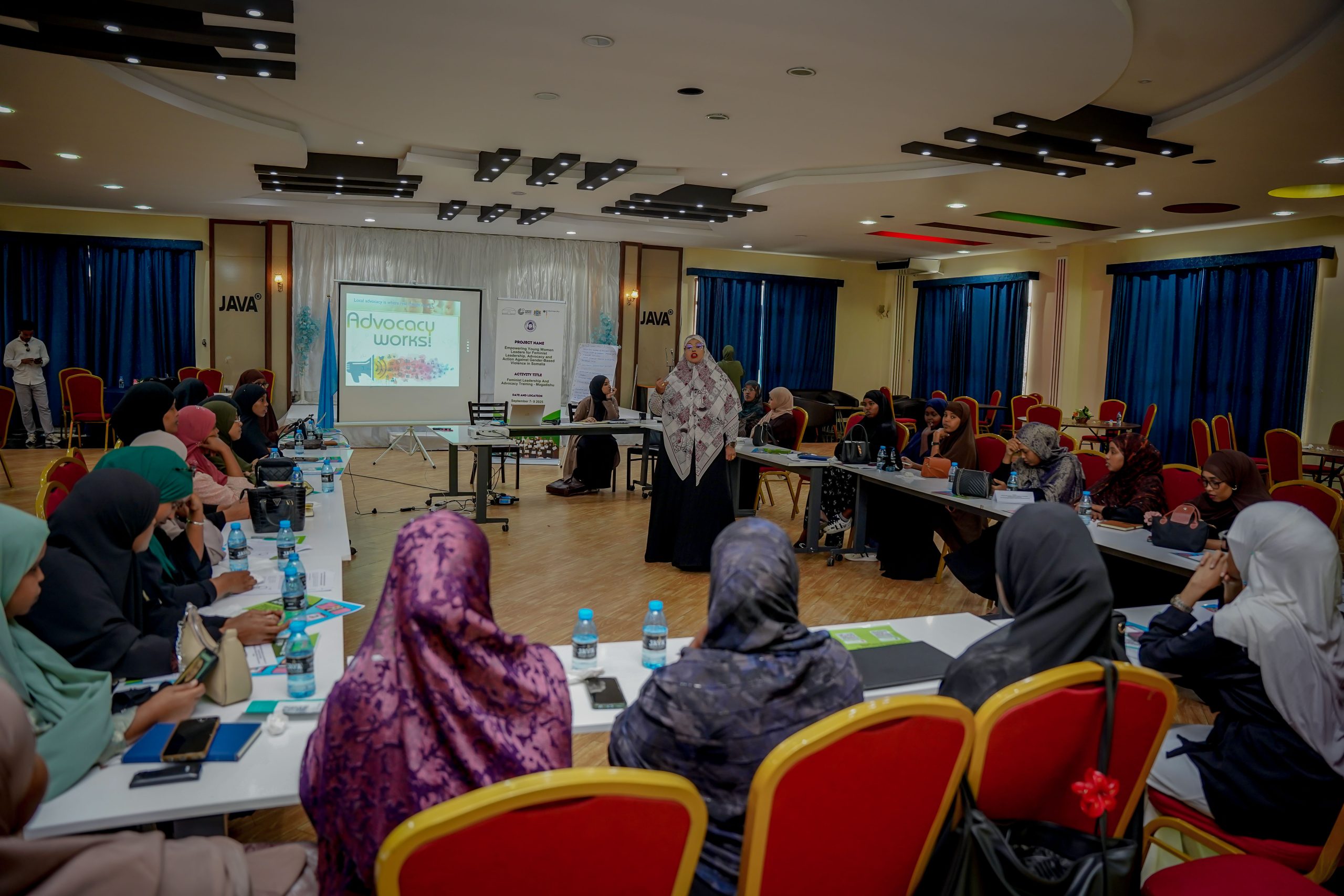
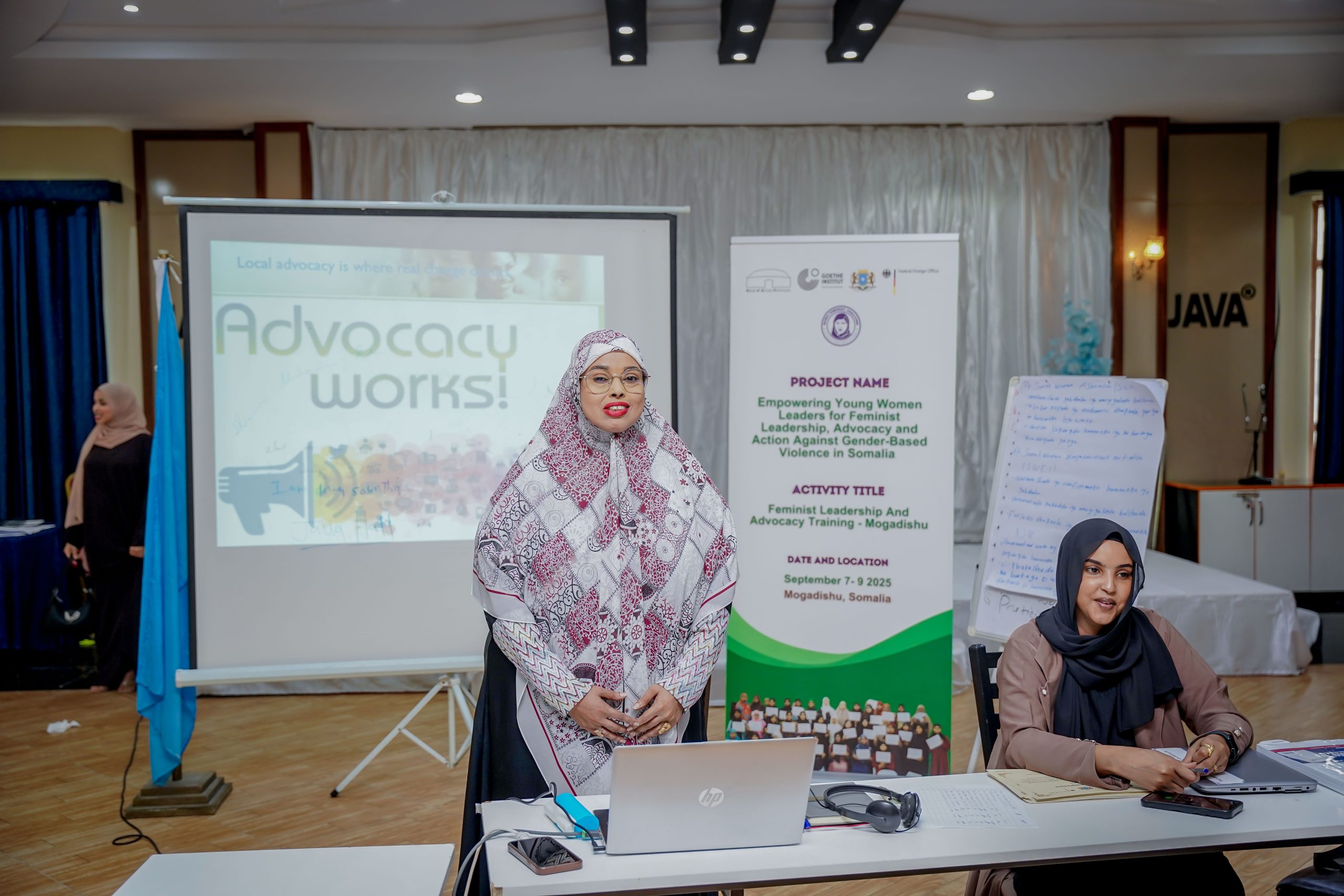
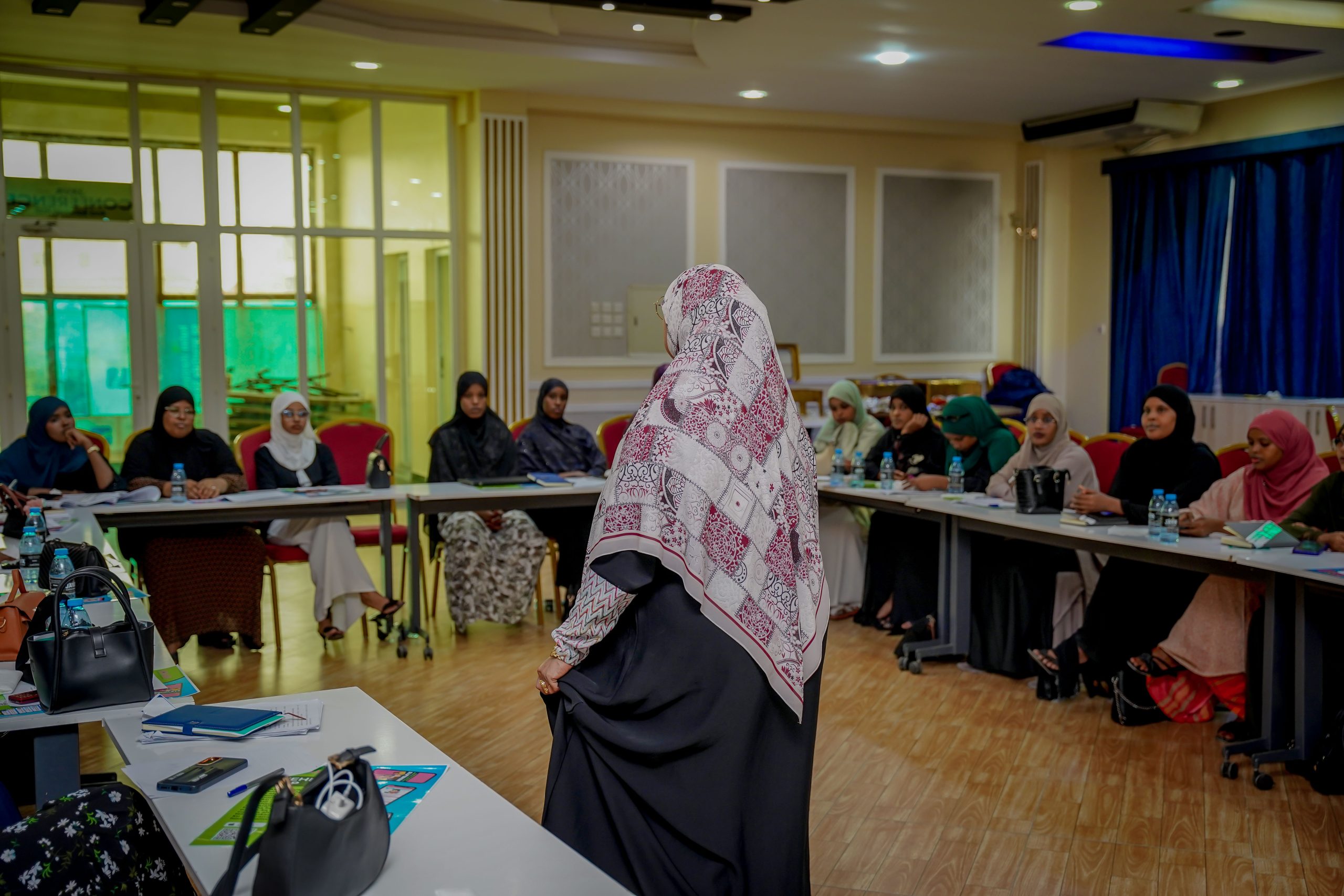
With the support of the Goethe-Institut’s House of African Feminisms, funded by the German Federal Foreign Office, Hawa Feminist Coalition successfully delivered a three-day in-person Feminist Leadership and Advocacy Training in Mogadishu, bringing together 40 emerging young women leaders from across Mogadishu, Somalia’s capital city. Priority was given to participants from internally displaced (IDP) and minority communities, ensuring the training reached those most affected by gender inequality and gender-based violence (GBV).
This second in-person cohort training, following the first cohort held in Garowe, was conducted in Mogadishu, Somalia, from September 7 to September 9, 2025. The training forms the second cohort of a broader national program designed to equip over 100 young women across Somalia with feminist leadership, advocacy, campaigning, and movement-building skills.
This training responds to Somalia’s deeply rooted gender inequalities and persistently high levels of gender-based violence (GBV). While young women in Mogadishu are increasingly stepping into leadership and activism roles, many continue to lack access to feminist leadership training, practical advocacy tools, and safe spaces for collective organizing. The training was designed to help close this gap by strengthening participants’ confidence, skills, and solidarity networks, enabling them to lead meaningful change, advance gender justice within their communities, and contribute to the growth of the feminist movement in Somalia.
Training Participants
The training followed an open and transparent call for participants, inviting applications from young women aged 18–30 residing in Mogadishu. The call received over 300 applications, reflecting strong demand for feminist leadership training; however, only 40 participants could be selected in line with the training target. Selection prioritized leadership potential, commitment to social change, and limited prior exposure to feminist leadership training.
This second in-person cohort reflected strong inclusivity, with a significant proportion of participants drawn from internally displaced (IDP) and minority communities—groups that are often excluded from leadership opportunities despite being among the most affected by gender-based violence in Somalia. By centering these voices, the training aimed to address gaps in access to feminist organizing spaces and strengthen leadership capacity within the most vulnerable communities.
Training Modules and Key Themes
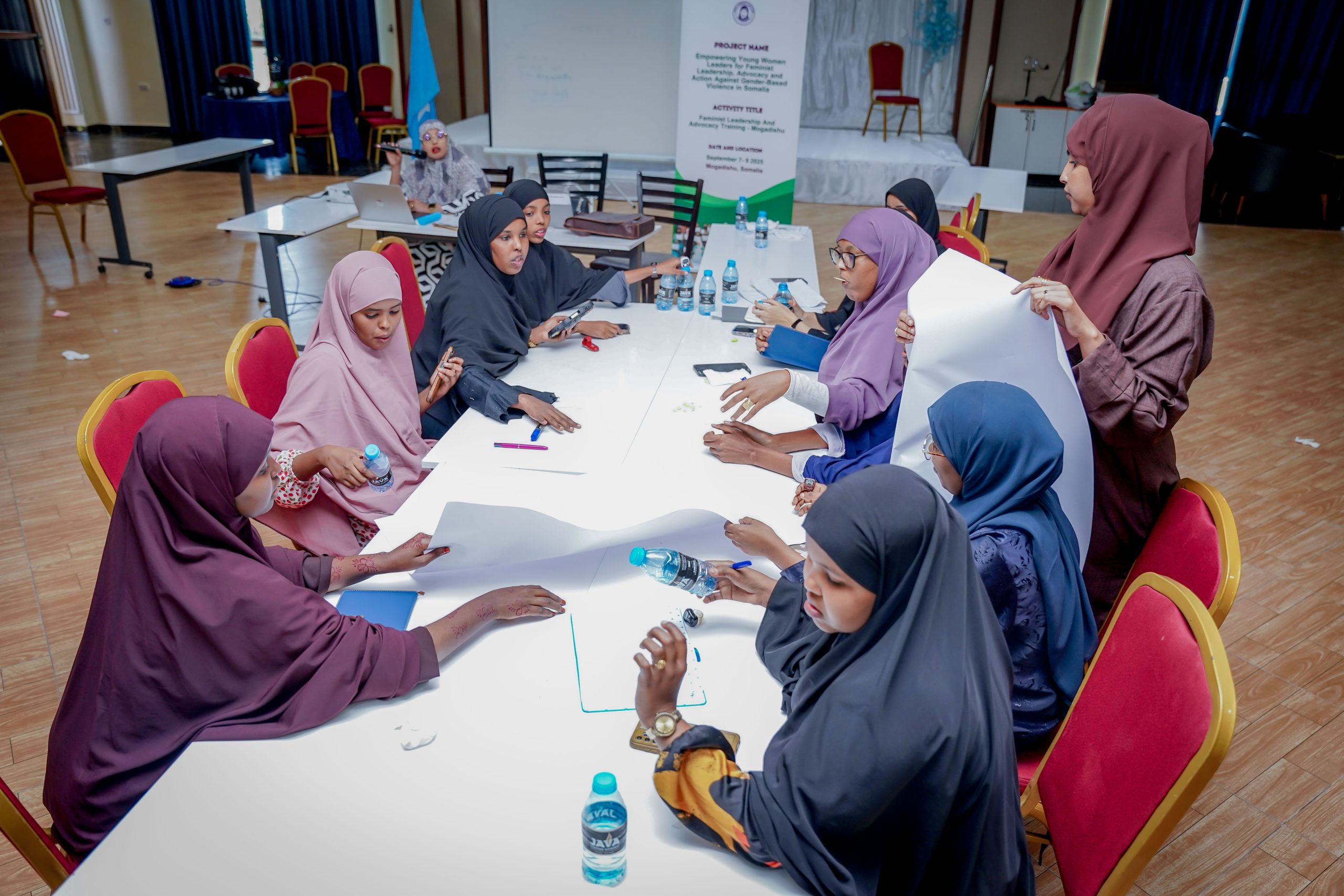
Grounded in feminist theory and participatory learning, the training curriculum combined interactive sessions, facilitated discussions, group work, role play, and practical exercises to ensure a strong connection between theory and real-life practice. Over the three days, participants engaged deeply with the following six core modules:
- Understanding Feminist Leadership: Participants explored the foundations of feminist leadership, examining how it differs from traditional leadership models and how it can be used to challenge systemic inequalities. The sessions drew on case studies of feminist leaders and movements from Somalia, Africa, and the Arab region, helping participants contextualize feminist leadership within their own realities.
- Power and Intersectionality: This module focused on understanding different forms of power—structural, personal, and collective—and how overlapping identities such as gender, displacement status, class, and minority identity shape women’s lived experiences. Through practical exercises, participants learned how to apply an intersectional feminist lens in leadership, advocacy, and decision-making.
- Advocacy and Campaigning Skills
Participants were equipped with practical advocacy tools, including how to design advocacy strategies, develop clear messages, engage policymakers and community stakeholders, and use social media effectively for campaigning. The module emphasized locally grounded advocacy action plans tailored to participants’ own communities. - Movement Building: This session introduced the history and principles of women-led and feminist movements, highlighting the importance of vision, collaboration, and sustainability. Using Hawa Feminist Coalition’s journey as a case study, participants explored how to build alliances, overcome challenges in grassroots organizing, and sustain collective feminist action over time.
- Feminist Approaches to Ending GBV: Participants examined the root causes of gender-based violence in Somalia through a feminist lens, alongside community-based strategies for prevention and response. Role-play and scenario-based exercises enabled participants to practice survivor-centered approaches and advocacy for gender-equitable laws and policies.
- Peer Networking and Collaboration: The final module focused on building lasting peer networks for collective action. Participants engaged in structured peer learning, explored digital platforms such as WhatsApp, Signal, and Slack for collaboration, and developed plans to sustain knowledge sharing, mutual support, and feminist organizing beyond the training.
Responding directly to participant needs identified through pre-training surveys, Hawa Feminist Coalition also added a Digital Safety session, delivered voluntarily by the Somali Women Journalists’ Rights Association (SOWJRA). The session addressed online harassment, account security, safe digital organizing, and reporting mechanisms—an especially critical topic for women activists working in digital spaces.
Overall, the curriculum emphasized learning by doing, collective reflection, and solidarity—ensuring participants left not only with knowledge, but with practical skills, confidence, and a strong sense of connection to a broader feminist movement in Somalia.
The training emphasized applied feminist practice through co-creation and scenario-based learning. Participants jointly developed advocacy action plans for their own communities, such as school-based GBV awareness campaigns, ward-level safe-space circles for women, and district-level dialogues engaging elders and women councillors.
Expert Facilitation
The training was facilitated by Mrs. Ifrah Abdinor Farah, a renowned Somali feminist and women’s rights advocate with over 15 years of experience championing gender justice and addressing GBV. Holding a Master’s degree in Women’s Rights, she brought deep feminist knowledge alongside practical, context-specific examples drawn from years of grassroots activism and policy engagement. Participants consistently highlighted her ability to create a safe, inclusive, and inspiring learning environment that encouraged open dialogue, critical reflection, and collective learning.
Reflections on Learning, Solidarity, and Action: Reflections from the Training
At the conclusion of the training, participants reported increased confidence and strengthened practical skills to lead with a feminist and intersectional lens, design and implement grassroots advocacy initiatives, engage policymakers and community leaders on issues of gender-based violence (GBV) and gender justice, and build peer networks that contribute to a broader feminist movement. The impact of the Mogadishu Feminist Leadership and Advocacy Training was powerfully reflected in the voices of the participants:
Participants emphasized that learning about power, intersectionality, and movement building significantly sharpened their advocacy skills and strengthened their ability to articulate and address systemic inequalities:
The Digital Safety session resonated strongly, particularly among participants who are active on social media, as women activists—and Somali women more broadly—are increasingly facing online violence, with women activists experiencing especially high levels of targeted attacks:
Beyond skills and knowledge, the training fostered a deep sense of connection and solidarity among participants. A WhatsApp peer network was established for the Mogadishu cohort to sustain collaboration beyond the training, and many participants also joined Hawa Feminist Coalition’s Young Feminist Activists community, linking them to ongoing mentorship, collective solidarity, and national-level advocacy efforts.
Several participants also expressed a strong desire to translate their learning into action, demonstrating immediate commitment to apply the knowledge and skills gained from the training and to take active roles in advocacy efforts to promote women’s rights and gender justice in Somalia:
Overall, the training met and exceeded its intended objectives by equipping young Somali women leaders with the skills, confidence, and solidarity networks required to challenge gender-based violence, lead grassroots change, and advocate effectively for their rights. Hawa Feminist Coalition awarded certificates of completion to all participants who successfully completed the three-day training held in Mogadishu, Somalia.
Next Steps
The Mogadishu training marked a critical step in Hawa Feminist Coalition’s broader national initiative, which includes the first in-person cohort of 35 young women leaders trained in Garowe, a third nationwide cohort to be delivered online, and a Community Engagement and Solidarity Event to be held during the 16 Days of Activism Against GBV. Together, these interconnected efforts aim to strengthen feminist leadership, amplify marginalized voices, and advance collective action to end gender-based violence and promote gender justice across Somalia.
Hawa Feminist Coalition will continue to engage the trained young women leaders and connect them with peers across Somalia through dedicated WhatsApp groups and ongoing network-building efforts, ensuring sustained collaboration and long-term impact.